Getting dressed for a job interview is one of the few moments where what you wear genuinely matters, and most women already know it.
The goal has never been to look like a different person. It’s to look like the most pulled-together version of who you already are.
The outfits ahead work because they hit that balance cleanly.
They read as serious without being stiff, translate across industries, and carry you through a morning of handshakes and first impressions without making you think twice about what you have on.
1. The Navy Blazer and Tailored Trousers
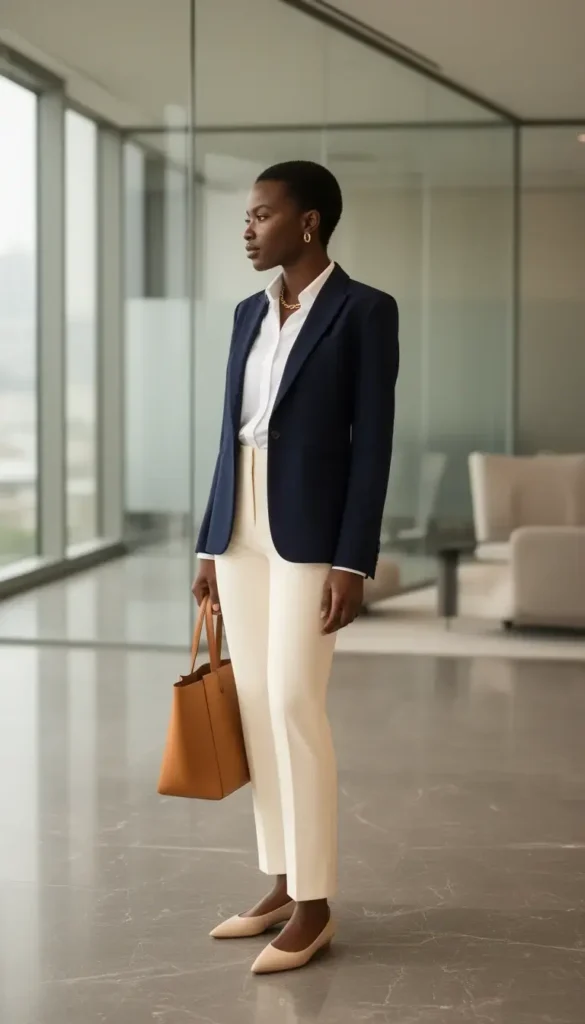
Navy is one of those rare colors that works across every industry without reading as a uniform. Darker than a casual outfit but warmer than strict corporate black, it strikes exactly the right note for an interview setting.
Pair a structured navy blazer with straight-leg cream or ivory trousers for a combination that feels intentional rather than assembled.
The contrast between the two tones adds visual interest without competing with your presence in the room. A white button-down underneath keeps things clean, but an ivory silk blouse adds a quieter, more elevated quality.
The shoes make or break this look. Pointed-toe flats in nude or tan keep the silhouette sleek without requiring heels.
If you prefer height, a low block heel in a warm neutral reads professional and grounded rather than formal and stiff.
Keep jewelry minimal, one delicate necklace and simple earrings, so the outfit does the talking before you even sit down.
This is a reliable choice for corporate roles, creative industries, and anything in between. It photographs beautifully and holds up across a full day of interviews if you have multiple rounds.
2. The Camel Wrap Dress
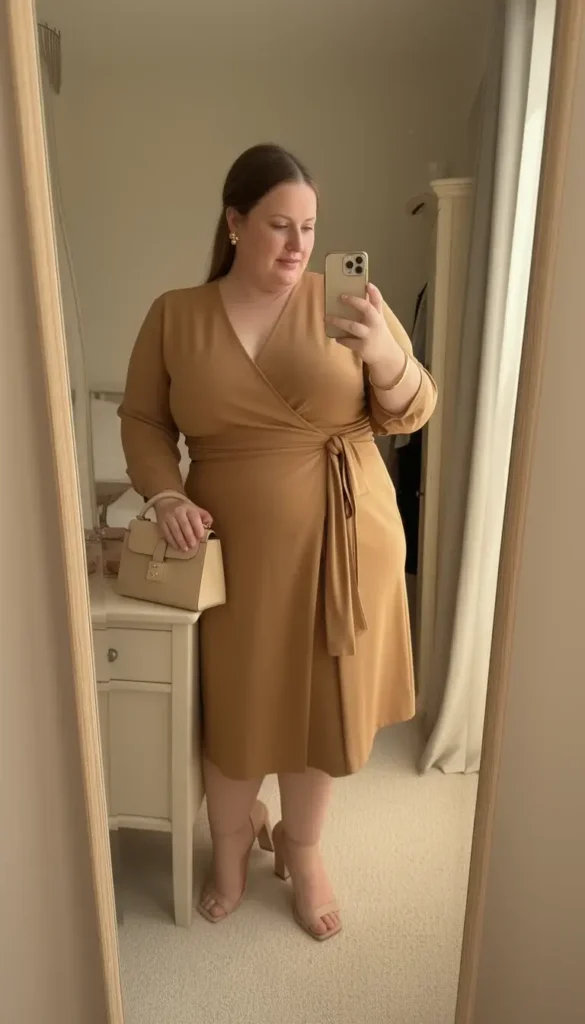
A wrap dress is one of the most universally flattering silhouettes in women’s dressing, and in camel, it earns a permanent place in the interview wardrobe.
The warmth of camel reads as confident and poised without sliding into the formality of black or navy.
It’s a color that photographs well in both natural and artificial light, which matters when you’re in offices with fluorescent overheads.
A midi length, hitting between the knee and mid-calf, is the most interview-appropriate cut. It works on every body type and eliminates the need to adjust anything while seated.
Style it with nude or warm beige block-heeled sandals, a small structured bag, and simple gold jewelry.
If the office environment is on the cooler side, a fitted camel or ivory blazer layered over the dress turns the whole look into something more structured. Avoid bold prints, deep necklines, or anything with significant stretch.
The version that works best has some weight to the fabric, crepe or ponte rather than jersey, so it holds its shape throughout the day.
3. The Tonal Grey Power Suit
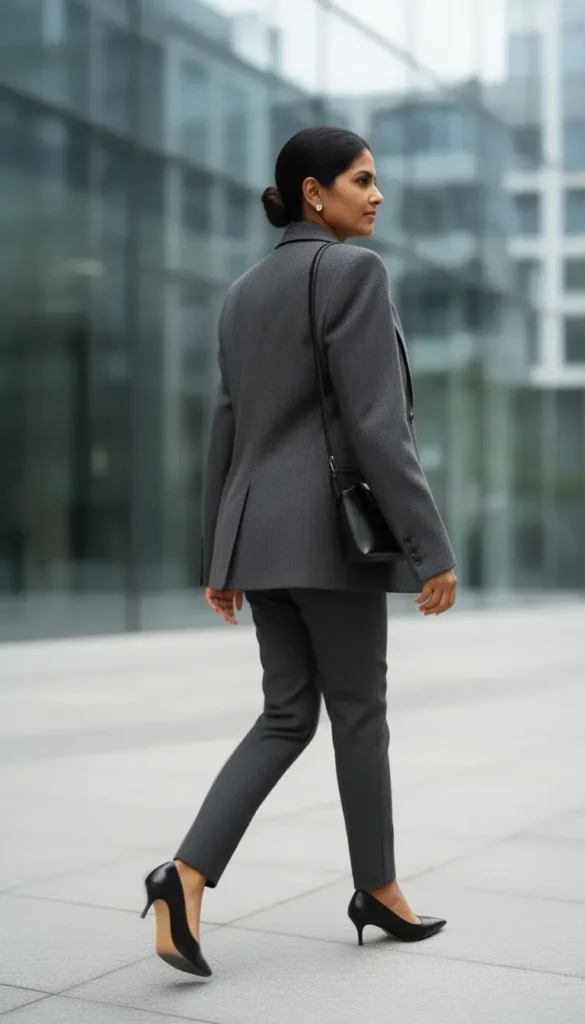
Wearing a matching blazer and trouser set in the same shade of grey sends a clear message before you say a word. It’s the quietest version of power dressing, composed and precise without looking like you tried too hard.
A charcoal or medium grey works better than pale grey for an interview, as it reads as more decisive and holds its visual weight in a room.
The key to making a matching suit feel modern rather than dated is the cut. An oversized blazer with broad shoulders worn over slim or straight-leg trousers creates the kind of silhouette that feels current and intentional.
If the blazer fits more tailored, opt for wider trousers to add visual balance.
Underneath, a white fitted tank or a soft ivory shell keeps the look clean. Pointed-toe flats or low kitten heels in black or nude finish it without overwhelming the outfit.
This combination translates across finance, tech, law, and creative fields equally well, which makes it worth the investment.
4. The Silk Blouse and Wide-Leg Black Trousers
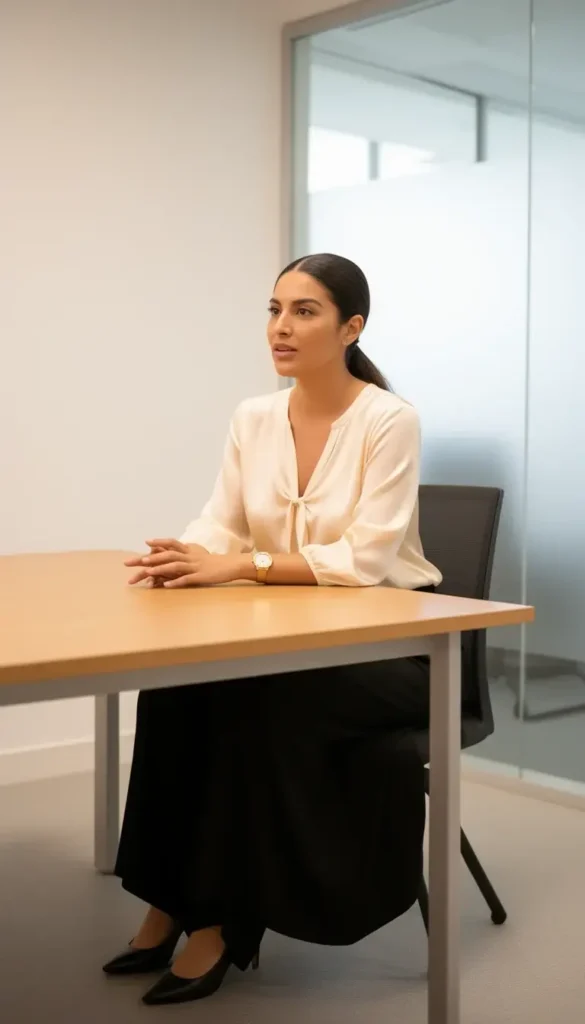
This combination is one of the most quietly effective interview outfits in existence, largely because it doesn’t read as an “interview outfit.” It reads as someone who simply dresses well.
Wide-leg black trousers with a full-length hem are inherently polished. Pair them with a cream or ivory silk blouse with a soft drape and a relaxed tuck at the front, not fully tucked and not untucked, just slightly pulled out at the front to avoid looking rigid.
The blouse does significant work here: silk or a silk-look fabric catches light differently than cotton and carries an immediate sense of quality that more structured pieces sometimes lack.
Pointed-toe flats or simple slingback heels in black or dark nude extend the leg line under the wide leg without interrupting it. For accessories, a structured leather tote in tan or cognac and a simple gold watch are enough.
This is an outfit that works beautifully for roles in media, communications, hospitality, marketing, and any environment where style is a soft skill.
5. The Structured Forest Green Midi Dress
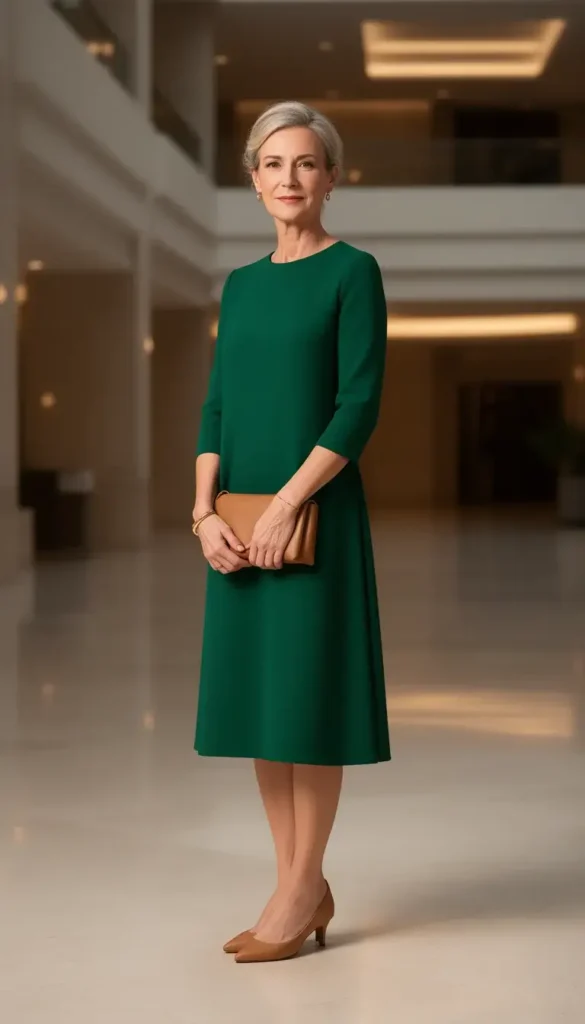
If you’re looking for one statement piece that handles the entire outfit decision for you, a structured forest green midi dress is worth considering seriously.
Green is an underused color in professional dressing, which is precisely what makes it work. It’s distinctive without being bold in the way that red or cobalt can feel.
Forest green in particular, deep and muted rather than bright, carries authority while remaining feminine and considered.
A structured fabric like crepe or ponte will always outperform stretch in this context. Look for a straight or slightly A-line silhouette with a clean neckline, scoop or crew, rather than anything wrapped or plunging.
Nude or tan pointed flats keep the look grounded, while a low heel in warm taupe adds presence without demanding attention.
The accessories brief is simple: gold jewelry, a small structured bag in tan or cognate, and nothing else.
This outfit translates easily across industries and is especially effective for leadership positions, client-facing roles, and industries where confidence and originality are valued equally.
6. The Blush Blazer and Ivory Wide-Leg Trousers
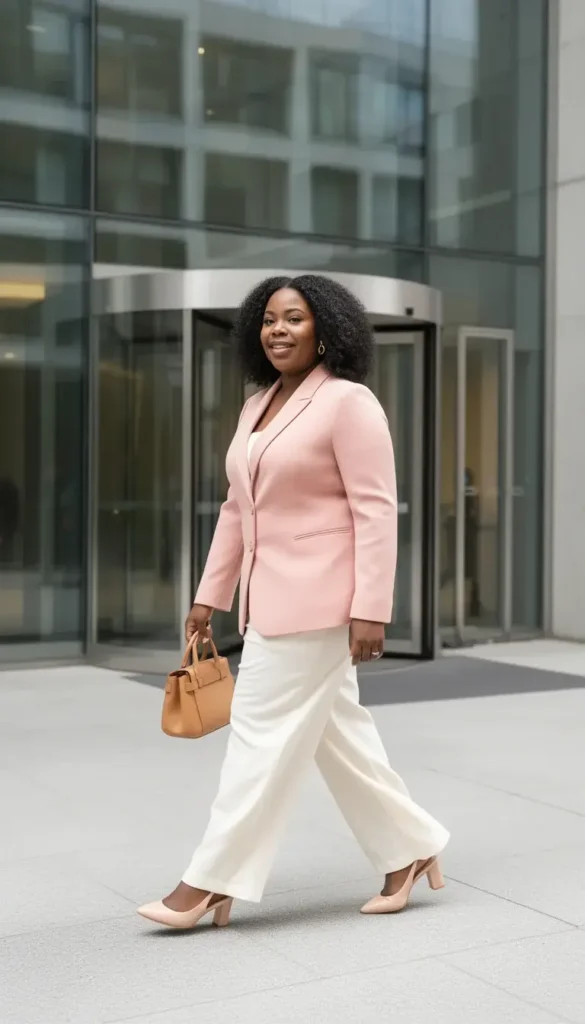
Blush is one of those colors that gets misread as soft when it’s actually quite precise. Worn with clean ivory or white trousers and minimal accessories, it reads as intentional, warm, and quietly confident.
The blazer should be structured, not draped or boxy. A fitted single-button style or a tailored double-breasted version in a pale dusty rose rather than candy pink is the version that works for an interview.
Wide-leg trousers in ivory or bone create a tonal effect that makes the outfit feel cohesive rather than assembled.
The contrast between the two near-neutrals adds depth without creating visual noise.
Ivory or beige slingback heels, a small nude or tan structured bag, and gold jewelry are the correct accessories. Keep the bag compact: a too-large tote undermines the precision of this look.
This outfit is particularly effective in industries like PR, events, luxury retail, and hospitality, where personal presentation is part of the professional standard.
For cooler environments or a more conservative industry, swap the ivory trousers for tailored cream in a slightly heavier fabric.
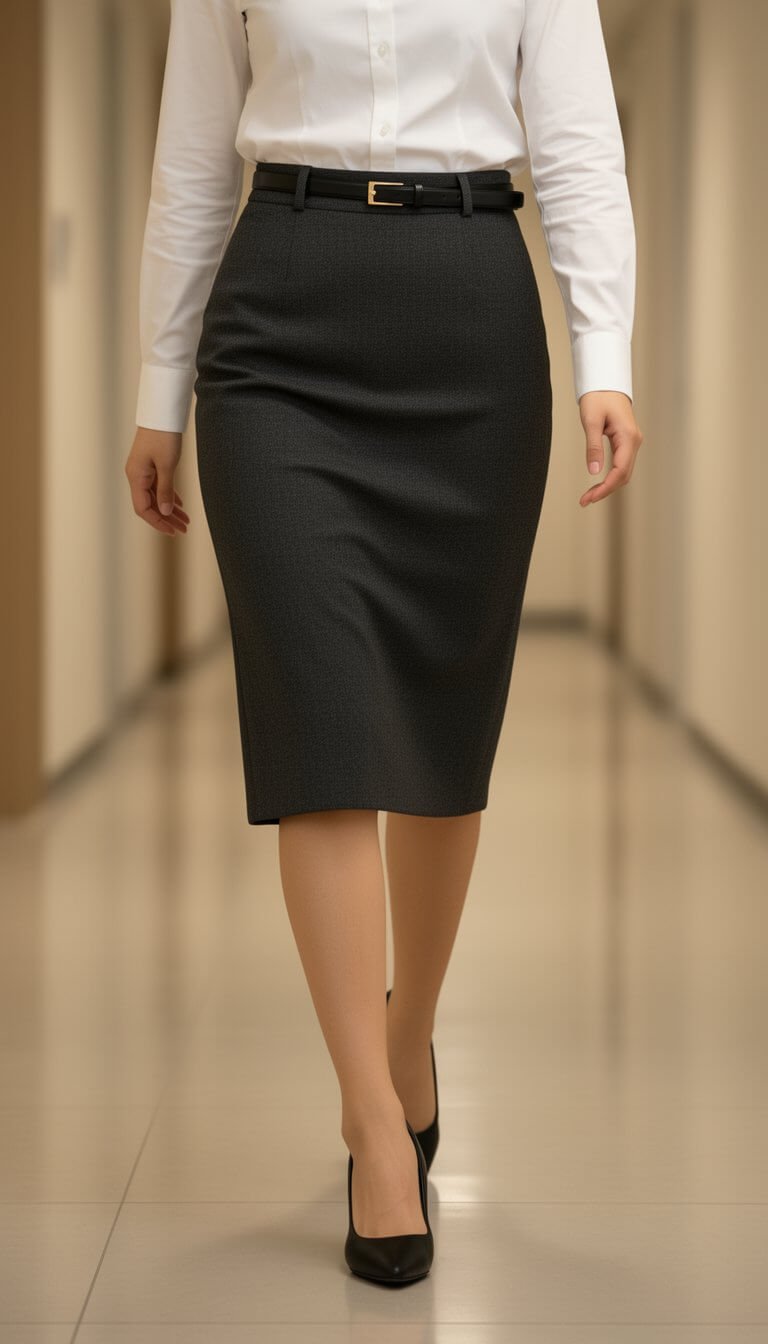
7. The White Button-Down and Tailored Midi Skirt
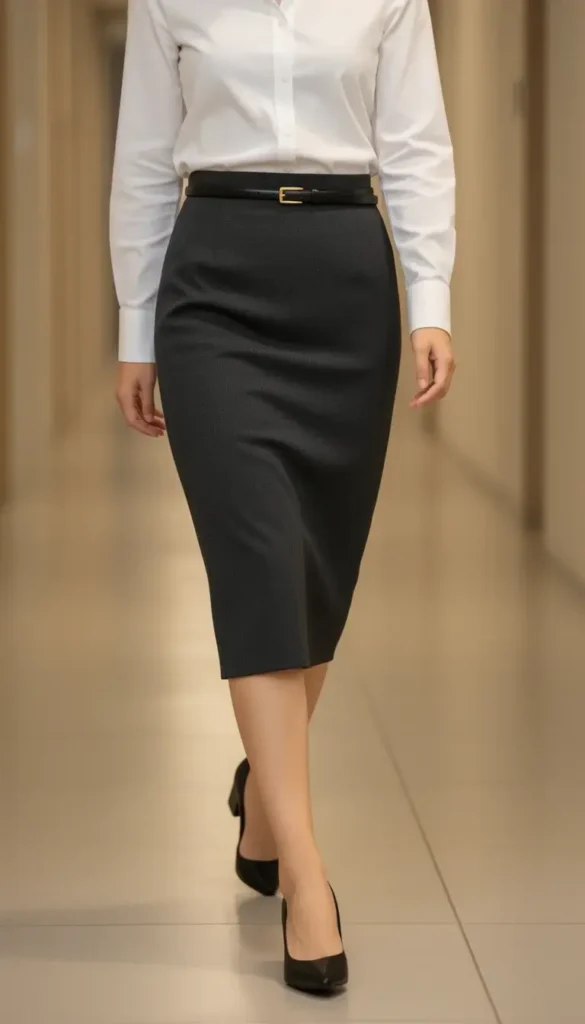
A white button-down is one of the most versatile pieces in professional dressing, but the way most women wear it to interviews undersells its potential. The skirt choice is where the outfit becomes memorable.
A tailored midi skirt in a structured fabric, pencil cut or a gently flared A-line, elevates the button-down from basic to genuinely polished. In charcoal, camel, or deep burgundy, the skirt becomes the visual anchor while the white shirt reads as crisp contrast.
Tuck the shirt fully and evenly; any half-tuck here disrupts the tailored quality you’re aiming for.
A thin belt in the same tone as the skirt, if the skirt has belt loops, adds a finishing detail without overcomplicating the look.
Block-heeled shoes or low kitten heels in a neutral that echoes the skirt tone are the cleanest finish. This outfit communicates precision and works across a broad range of industries.
It’s also one of the most comfortable options on this list, which matters when you need to focus entirely on the conversation rather than how you’re sitting.
8. The Burgundy Knit Sheath Dress
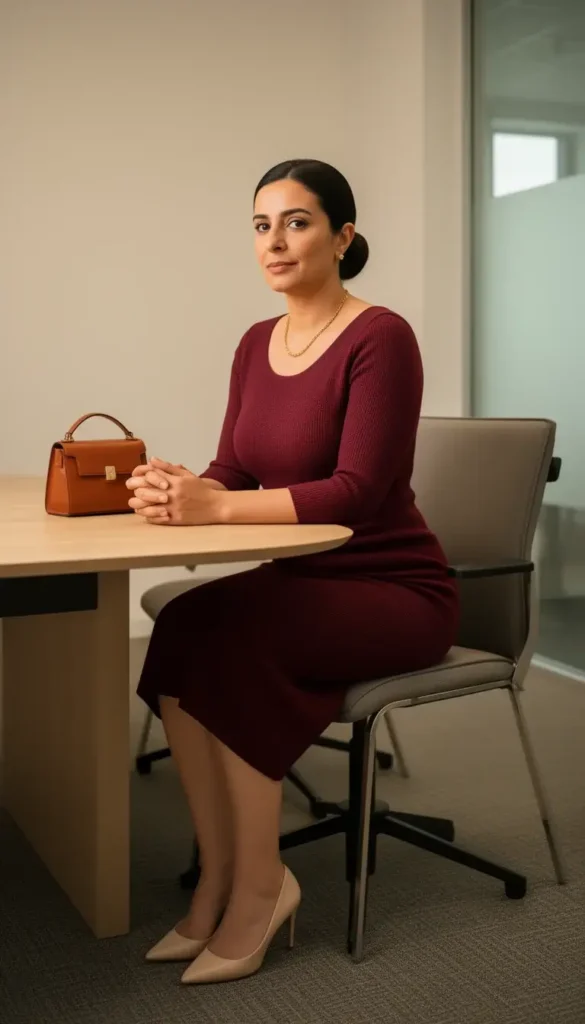
Burgundy is the professional wardrobe’s most underrated neutral. It pairs with black, tan, and ivory equally well, holds its color under all lighting conditions, and carries a warmth that neither grey nor navy can match.
A knit sheath dress in a clean burgundy, not brick, not wine, but the clear mid-burgundy, is one of the sharpest interview options on this list when the fabric is right.
The fabric is the deciding factor. It should be a structured knit with visible weight rather than a clingy or oversized style.
Midi length is ideal: long enough to read as professional, short enough to maintain proportion. A scoop or crew neckline keeps the look clean at the top.
Nude or warm camel pumps, a cognac leather bag, and a thin gold necklace are the correct pairings. Avoid layering a blazer unless the office environment is notably conservative; the dress holds its authority on its own.
This is a strong choice for roles in finance, law, consulting, or any environment where composed authority matters.
9. The Cobalt Blue Blazer and Black Trousers
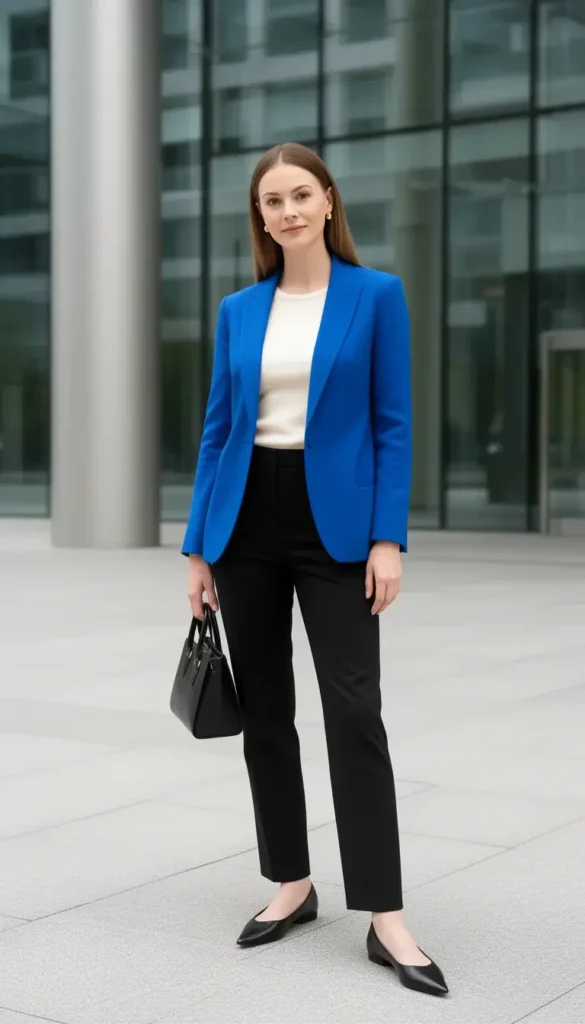
This is the interview outfit for the woman who wants to make a clear visual impression without defaulting to the expected palette.
Cobalt blue is a decisive color. It reads as confident, creative, and unambiguous, which is exactly the energy most women are trying to communicate in a room with people they’ve never met.
A structured single or double-button cobalt blazer worn over a simple white or ivory fitted top, tucked into slim or straight-leg black trousers, creates a look with genuine visual impact and genuine professionalism.
The key is that the blazer does all the expressive work, and everything else is clean and quiet.
Black pointed-toe flats or a low heel, a small black or navy structured bag, and simple silver or gold jewelry complete the look.
This works particularly well for roles in creative agencies, startups, media, and any environment that rewards visual confidence.
If the industry is more traditional, a navy blazer achieves a similar effect with slightly less statement energy. But cobalt, worn right, is hard to forget.
10. The Monochrome Grey Look
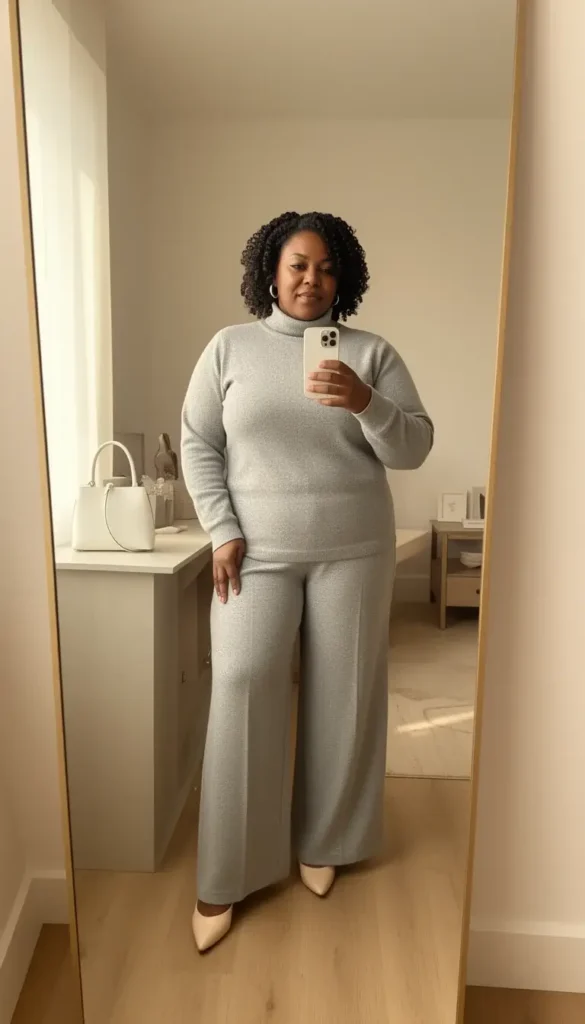
Monochrome dressing is one of the most underused strategies in professional styling. Wearing one color head to toe creates a continuous vertical line that is both elegant and visually authoritative.
In soft to medium grey, a turtleneck or fine-knit crewneck worn with wide-leg or straight-leg trousers in the same or a closely matched shade reads as polished and deliberate. It’s the color version of a suit without the formality of matching suiting fabric.
The success of this look depends entirely on tonal harmony: the pieces don’t need to be an exact match, but they should sit within the same grey family without one reading obviously warmer or cooler than the other.
Accessories in white, black, or silver keep the palette clean. A white or bone leather bag, silver hoop earrings, or a simple silver bracelet all work. Shoes in light nude or white extend the monochrome effect cleanly.
This outfit is especially powerful for women who wear it with intention: the absence of contrast makes the person wearing it the most compelling thing in the room.
11. The Trench Coat Over a Classic Black and White Base
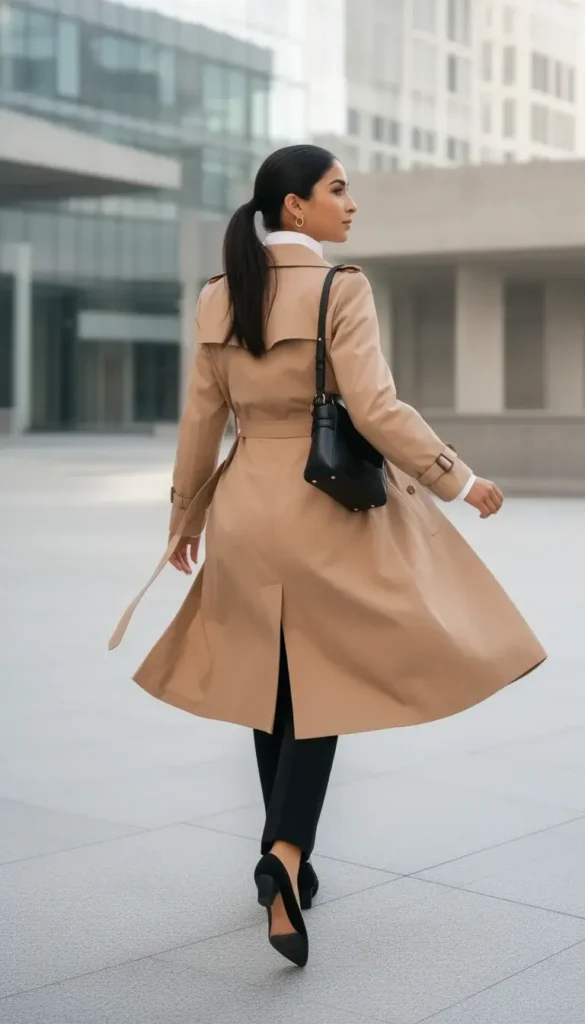
An open trench coat worn over a sharp black and white outfit has a particular quality that’s hard to replicate with any other layering piece. It signals that you’ve thought about the whole picture rather than just the outfit itself.
Wear a crisp white fitted blouse fully tucked into tailored straight-leg black trousers. Layer a camel or sandy beige trench coat on top, worn open rather than belted, letting the coat frame the outfit underneath.
The trench adds length, elegance, and a visual finish that elevates everything it’s placed over. In cooler months, this combination is genuinely practical as well as polished.
Keep the accessories underneath the coat minimal: small black flats or low heels, a structured black bag, and clean jewelry. The coat itself is the statement.
This is also one of the most versatile interview outfits on this list because the trench can come off when you sit down, and the outfit underneath stands entirely on its own.
That flexibility matters when you’re moving between environments throughout the day.
12. The Pinstripe Co-ord
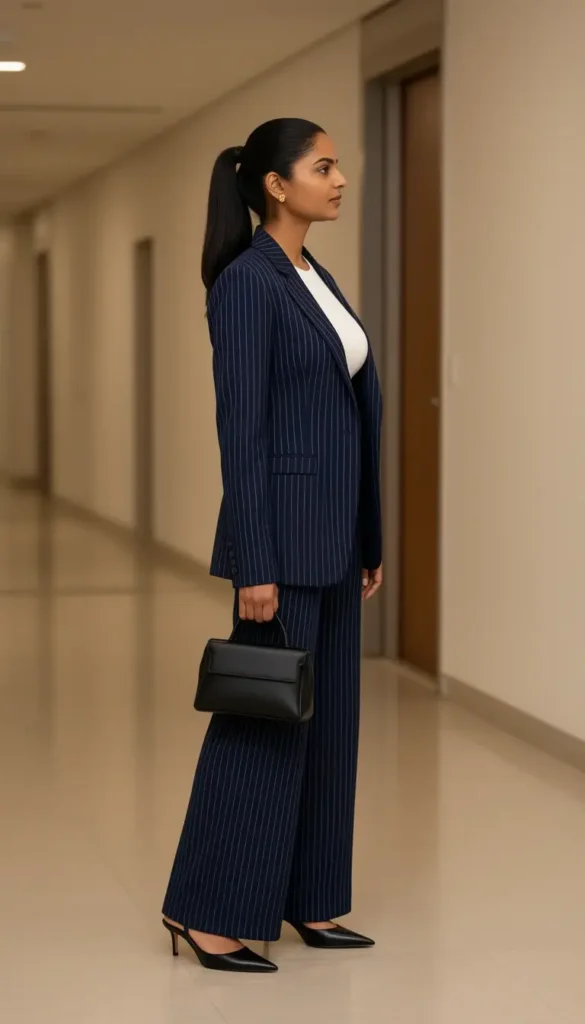
A pinstripe two-piece blazer and matching wide-leg or straight-leg trousers in the same stripe is one of the most considered things you can wear to an interview.
It communicates precision, seriousness, and an eye for detail that more casual professional looks simply don’t.
Navy or charcoal pinstripe reads as the strongest version of this look for an interview context.
The stripe should be fine and closely spaced rather than bold and wide. Underneath, a simple white or ivory fitted top keeps the focus on the suiting.
Avoid anything with prints, textures, or patterns of its own; the stripe is doing enough.
Black or navy pointed-toe shoes and a structured dark leather bag keep the rest of the outfit in line with the level of precision the suit establishes.
Keep jewelry clean and minimal: small earrings, one ring, nothing that creates sound or movement when you gesture.
This look is the professional equivalent of arriving slightly early. It signals that you understand what the occasion requires and came prepared to meet it.
13. The Ivory Tonal Suit for Quiet Luxury
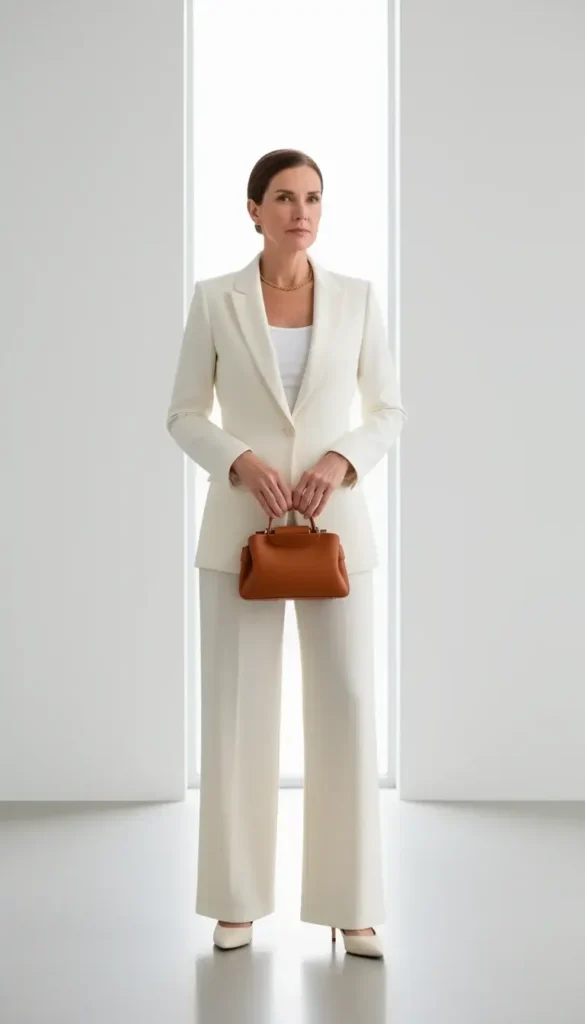
The most quietly powerful interview outfit on this list doesn’t ask for anyone’s attention. It holds it.
An ivory or cream blazer worn with ivory or cream wide-leg trousers in a closely matched shade is the professional wardrobe’s answer to quiet luxury. It reads as thoughtful, unhurried, and precise.
The palette says you don’t need a louder color to make your presence felt. For an interview, that’s a powerful message to send before you’ve opened your mouth.
The fabric choice is critical: a structured ivory in crepe, ponte, or a light suiting material holds its shape far better than anything in a softer drape.
Underneath, a fitted white camisole or a simple white crewneck keeps the neckline clean. Ivory or bone pointed-toe flats or kitten heels, a tan or cognac leather bag as the one note of contrast, and minimal gold jewelry complete the look.
This works across creative and corporate industries and carries particular authority in client-facing roles where your personal presentation is itself a credential.
Wear What You Actually Remember Getting Dressed In
The best job interview outfit is the one you stop thinking about the moment you walk through the door. That’s the benchmark worth using when you’re choosing.
Not the most formal option, not the most fashionable one, but the combination that makes you feel settled enough to focus entirely on the conversation.
Any of the thirteen looks above will do that job. The specific outfit matters far less than the fit, the fabric, and whether you’ve worn it long enough to know how it moves.
If something is new and untested, wear it for a few hours at home first. Confidence in a room is partly preparation, and partly just knowing that what you have on isn’t going to become a distraction.
The clothes are the support act. Make sure they know it.