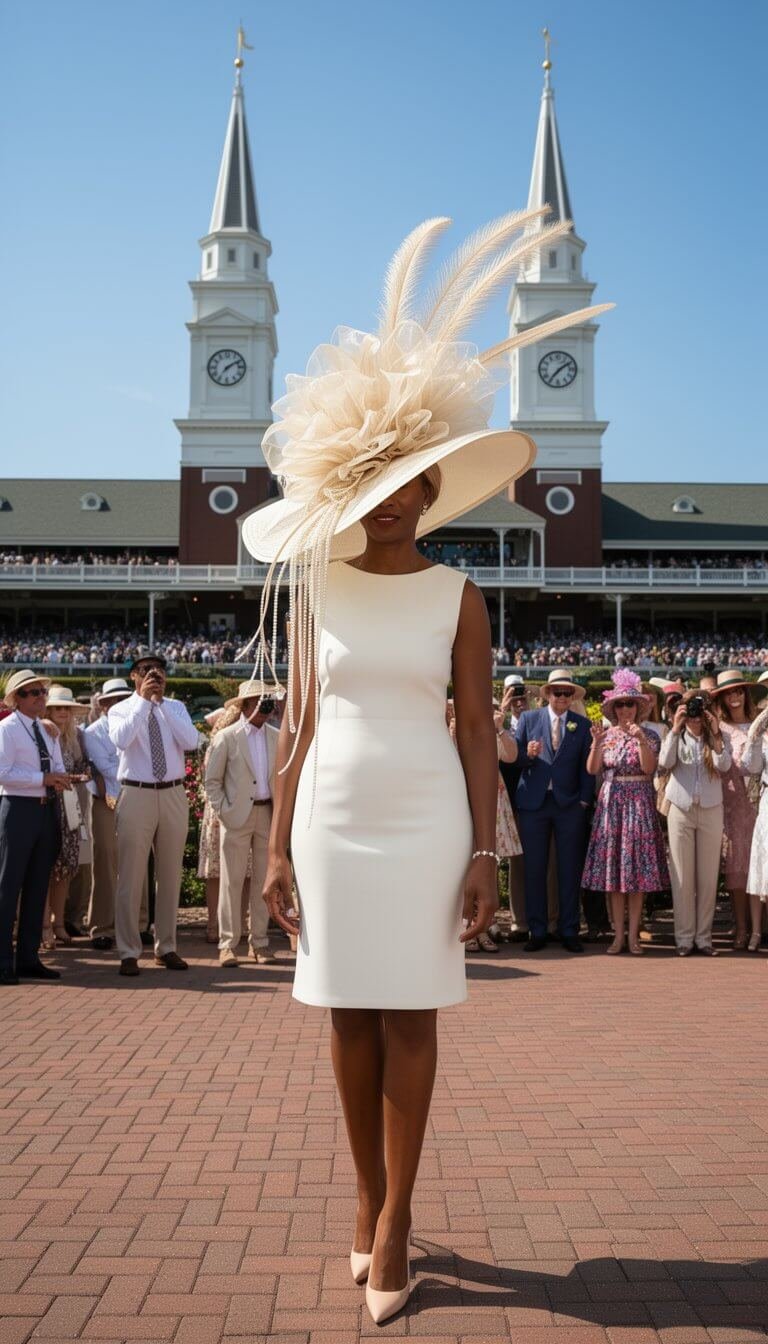
The Kentucky Derby has exactly one dress code that matters, and it lives above the neck. You can wear the most beautifully considered dress in the entire grandstand and still feel underdressed if the hat isn’t pulling its weight.
Conversely, the right hat can carry an otherwise simple outfit entirely on its own. That dynamic is what makes Derby hat dressing one of the most genuinely interesting style conversations in American fashion.
This ranking moves through the full spectrum, from the woman who wants a quiet, well-placed fascinator to the one who wants Churchill Downs to stop and look. Both are correct.
Everything between them is equally valid. The goal is to find where you actually sit on that spectrum and dress accordingly, with full commitment.
1. The Understated Pearl and Wire Hairpin
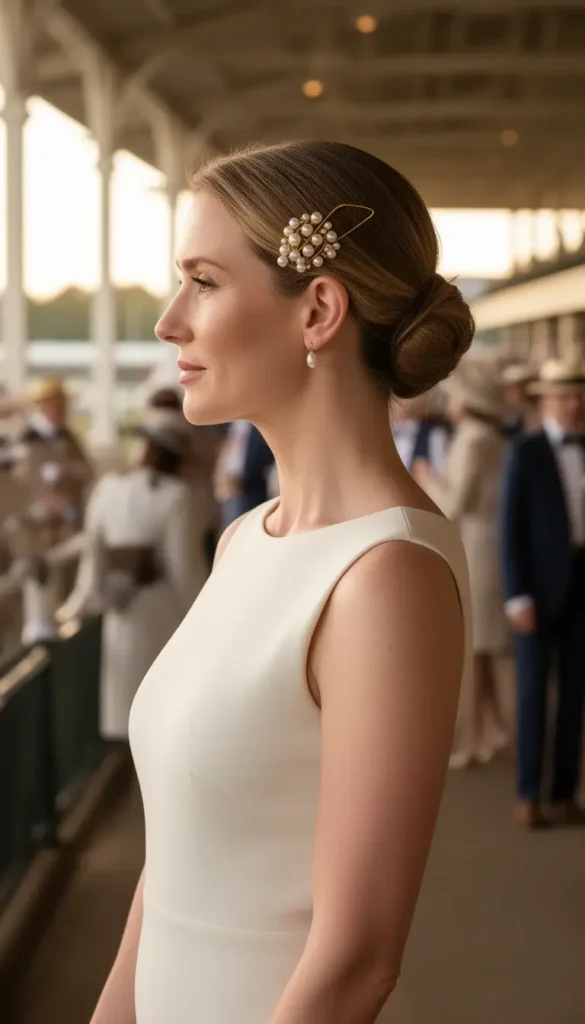
This is the entry point for the Derby hat conversation, occupying the space where accessory and hairstyle meet without committing fully to either.
A pearl cluster pin, a simple gold wire arc, or a twisted satin ribbon pinned at the crown reads as intentional dressing without making any particular statement beyond that you thought about it.
It works best for women who feel that hats don’t suit their face shape or who are attending a more casual Derby viewing party rather than the grandstand itself.
Paired with clean jewelry and a dress that carries the visual weight, this approach is entirely appropriate and photographs cleanly from any angle.
The risk is looking like you forgot the hat. Counteract that by ensuring the pin itself is genuinely quality and positioned with precision rather than casually clipped into whatever hair was available.
2. The Satin Ribbon Bow Fascinator
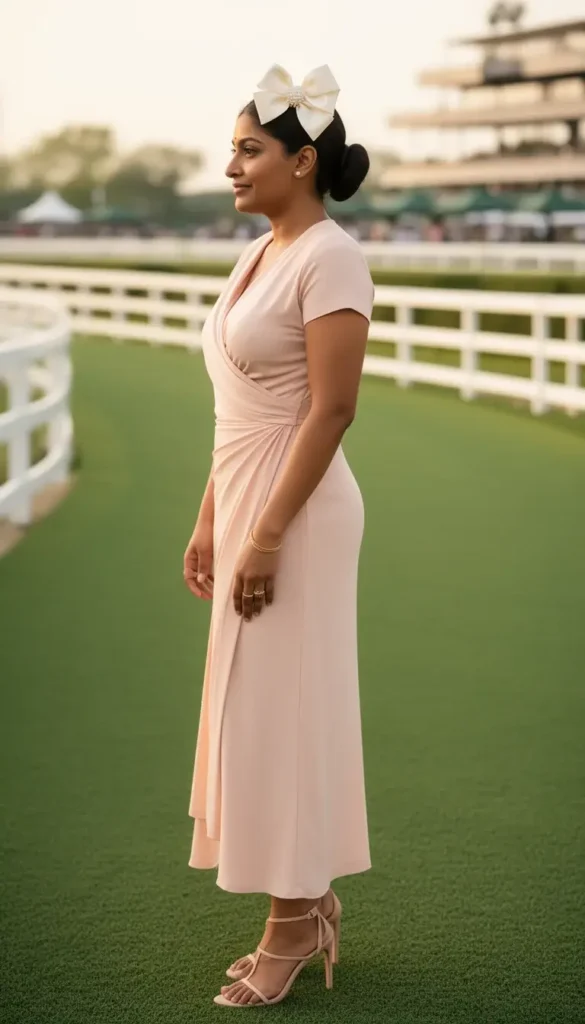
One step up from the hairpin, the satin bow fascinator signals Derby awareness without demanding full hat commitment.
Its intimacy is its strength. Worn just above the ear or tilted slightly forward at the crown, it reads as charming and considered rather than theatrical, which is exactly the register some Derby occasions call for.
The bow fascinator works particularly well in colors that match or closely complement the dress, creating a single cohesive color note from head to hem. Ivory on blush, wine on burgundy, navy on pale blue.
The monochromatic approach makes a small accessory look like a deliberate design decision rather than an afterthought.
For Churchill Downs itself, this is best suited to garden areas and casual grandstand seating rather than box seats, where the occasion expectation generally calls for something with more architectural presence.
3. The Crinoline Disc Fascinator
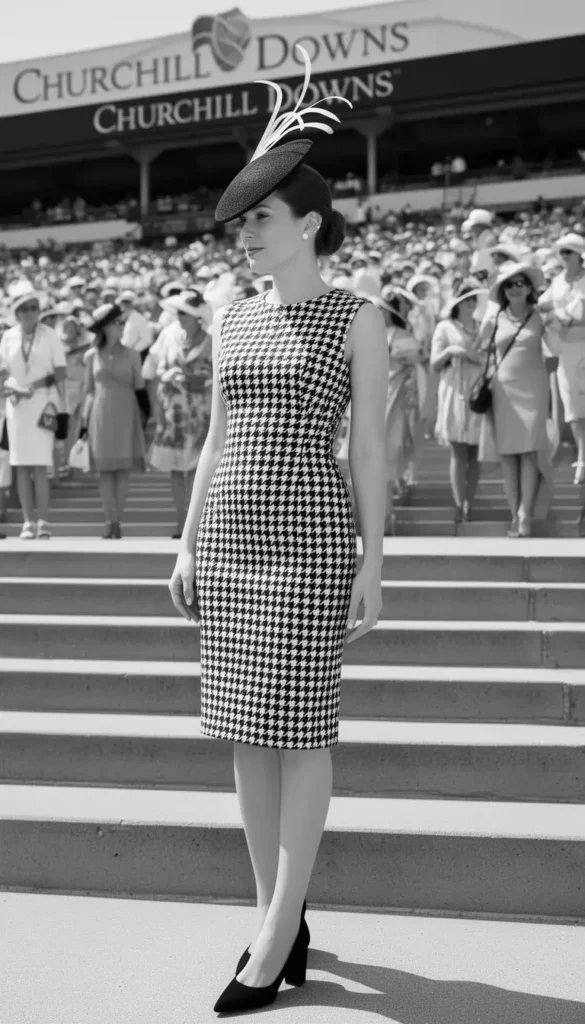
The crinoline disc is where the fascinator category begins to announce itself properly.
It has a flat or slightly domed circular base in a stiff net fabric that catches light and creates a silhouette without adding the volume or weight of a full hat.
Most are four to seven inches across, which is enough to read clearly in a crowd without requiring any structural reinforcement.
The single feather or floral addition placed at one edge is what gives the disc its personality. A tightly curled pheasant feather, a small silk rosette, or a cluster of berries and ribbon trim each produces a different character while working within the same restrained format.
This is a strong choice for women who want to honor the Derby hat tradition in a way that doesn’t interfere with viewing angles or crowd navigation.
It sits cleanly, stays secure with a comb or clip, and photographs well from both portrait and full-length distances.
4. The Classic Pillbox With a Half Veil
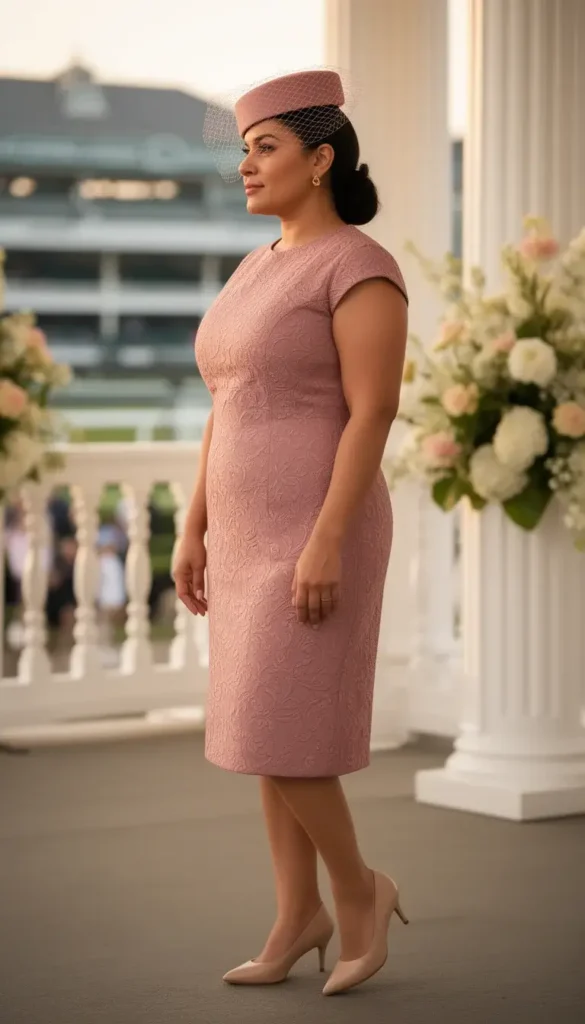
The pillbox hat is one of the most versatile pieces in the Derby hat vocabulary. Structured, flat-topped, and proportionally balanced, it sits close to the head and reads as polished and deliberate without ever threatening to block anyone’s view or catch a gust of wind.
The half veil is what pushes it from simple to considered, adding a layer of old Hollywood romance that feels entirely right at an event with Churchill Downs’ specific visual grandeur.
A veil that falls just past the bridge of the nose is the ideal length, creating the vintage reference without obscuring the face in photographs.
Birdcage veils that wrap around the hat’s brim rather than falling forward achieve a similar effect with slightly more contemporary sensibility.
Pillbox hats look most polished when the silhouette of the hat mirrors the silhouette of the dress in some way, structured atop structured, fitted atop fitted.
Wearing a pillbox with a very full or ruffled skirt creates a proportional mismatch that both elements fight to resolve.
5. The Natural Straw Hat With a Single Floral Trim
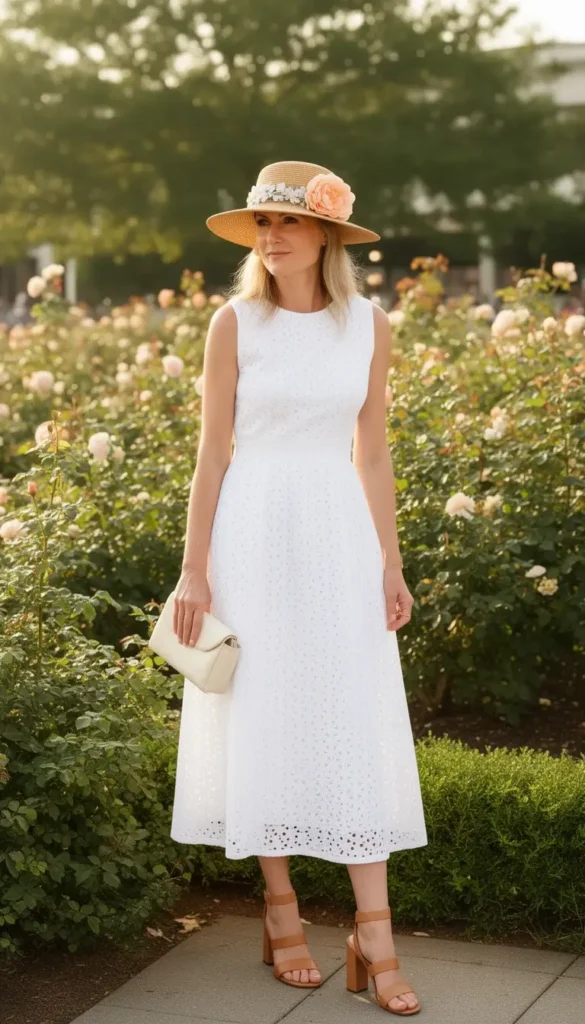
The natural straw hat with a single silk or dried floral accent is the Derby hat equivalent of a well-tailored blazer.
It works in virtually every context, suits almost every face shape, and communicates that you took the hat requirement seriously without dominating the overall look.
The single-flower rule is what keeps it from tipping into the next tier of drama.
A silk peony, a large garden rose, or a cluster of ranunculus placed at the base of the crown rather than the center of the brim gives the hat dimensional interest without visible structural effort.
The placement matters enormously. A flower at the base of the crown ties into the straw band naturally. A flower pinned randomly to the top surface tends to look like it arrived there by accident.
This hat suits every Derby environment from the lawn to the grandstand without adjustment and pairs most naturally with dresses in white, cream, blush, or soft pastel tones that complement rather than compete with the organic straw coloring.
6. The Wide-Brim With a Classic Grosgrain Band
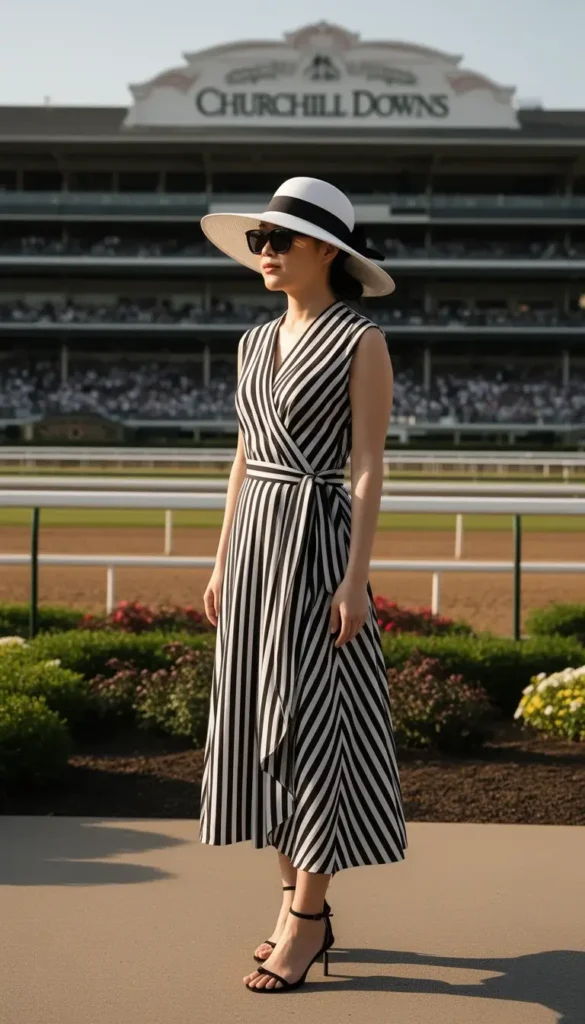
This is the version of the Derby hat that has appeared in every style guide written about the event for the last sixty years, and it has earned that permanence.
A wide-brim hat in white, ivory, or a clean neutral with a simple grosgrain ribbon band is the most photographically reliable option in the entire hat spectrum.
It works at every angle, suits every complexion in outdoor light, and creates a consistent silhouette that reads as intentional and polished from across the room.
The grosgrain ribbon is the crucial detail. It keeps the hat from looking like a beach hat by adding a tailored finishing note that references millinery craft.
A ribbon band of one to two inches wide with a small, neat bow at the back or side is the most versatile execution.
This is also the hat that holds up best over the course of a full Derby day, since it requires no structural maintenance, creates its own shade, and never looks out of place in any location across Churchill Downs.
7. The Asymmetric Brim Hat
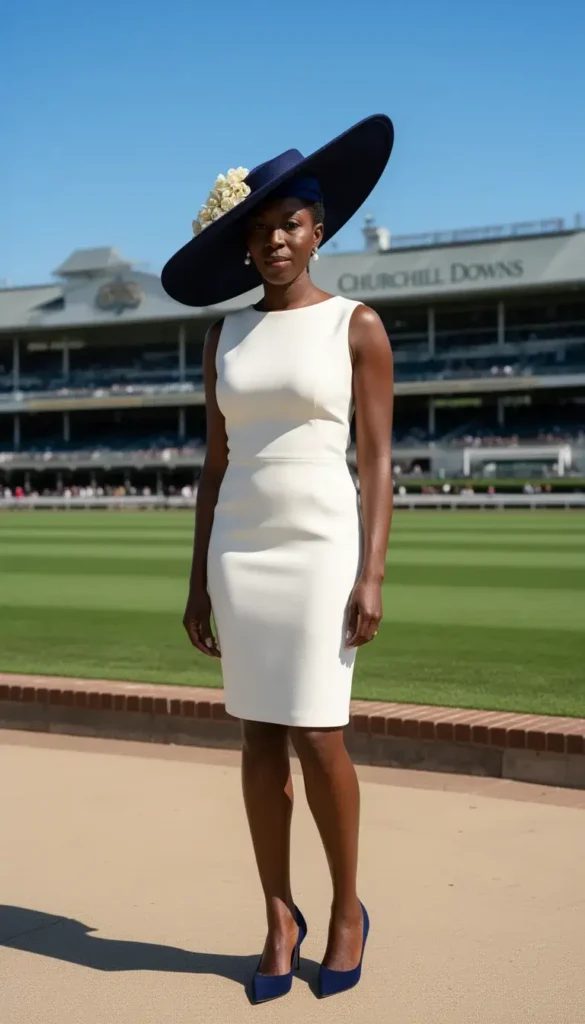
The asymmetric brim is where the Derby hat begins to move from classic to directional.
One side of the brim turns sharply upward while the other sweeps low or extends outward, creating a silhouette that differs from every angle and rewards movement rather than static posing.
It’s the first hat on this list that makes a genuine style statement rather than simply fulfilling the hat requirement.
The asymmetric brim suits a confident wearer because it requires commitment. Wearing it half-heartedly, tilting it uncertainly, or pairing it with an outfit that doesn’t rise to meet its energy produces a look that feels unresolved.
When worn with full conviction, especially with a well-fitted dress and clean shoes, it’s one of the most striking hat formats available.
This style looks particularly strong in solid colors, where the form of the brim is the visual story, rather than in patterns or textures that compete with the silhouette for attention.
8. The Wide-Brim With an Oversized Ribbon Bow
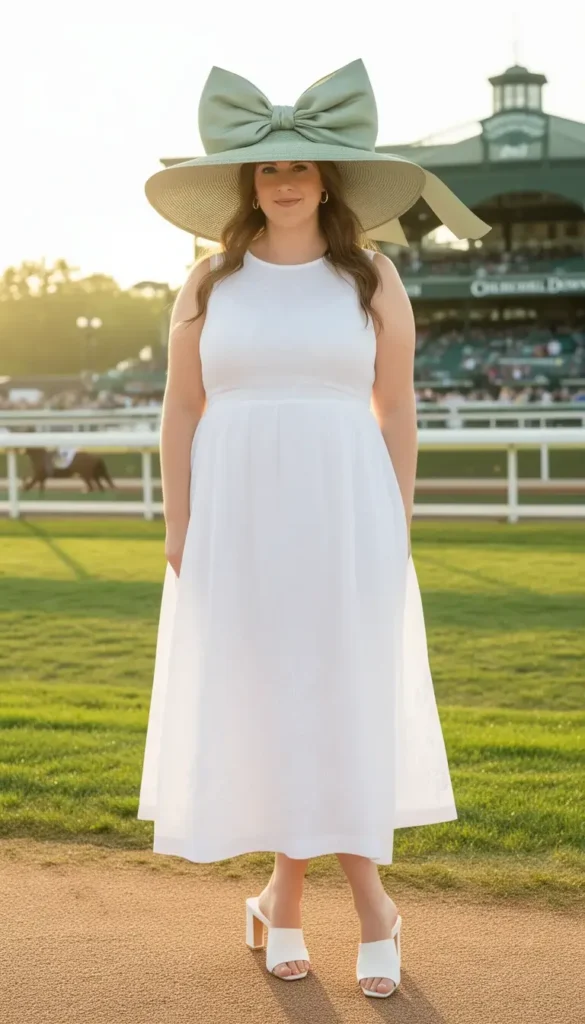
The wide-brim hat becomes a different animal entirely when the ribbon band is scaled up to an oversized bow.
A looped silk or satin ribbon bow that extends several inches beyond the crown transforms what would otherwise be a classic hat into a genuine statement piece, adding volume and personality without requiring any structural complexity beyond the bow itself.
The scale of the bow is what separates this from category six. A small, neat bow is a classic finishing detail.
A bow that extends four to six inches on each side of the knot is a design decision. The latter reads clearly in photographs from any distance and creates the kind of hat personality that Derby fashion coverage tends to respond to.
Colors that photograph best in this format are soft and slightly saturated: sage, dusty rose, pale coral, sky blue, and warm ivory.
These tones allow the bow’s volume to register without appearing heavy, which darker colors tend to do when scaled up significantly.
9. The Sculptural Sisal Fascinator
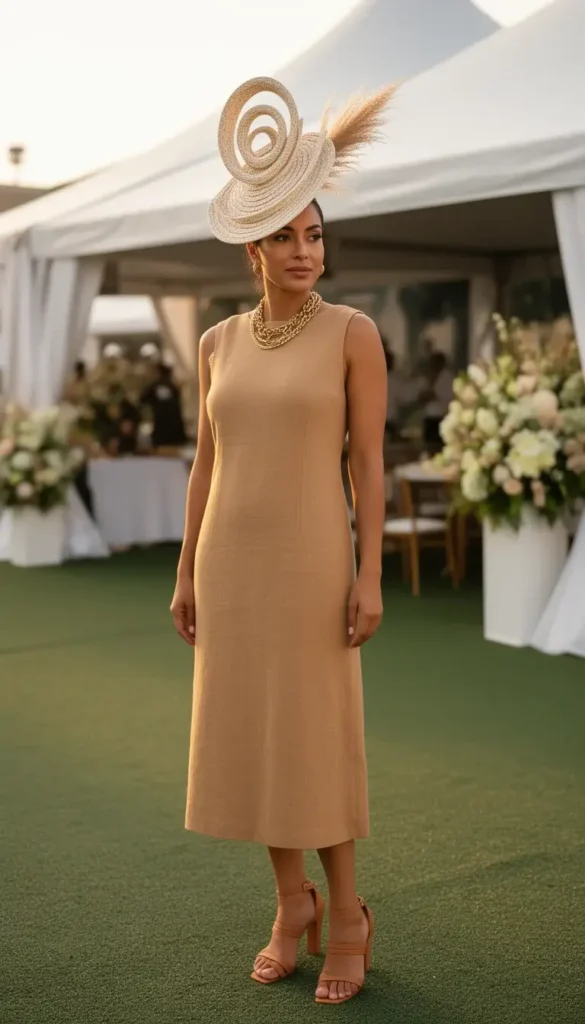
Sisal fascinators occupy an interesting space in the Derby hat world, sitting between the organic ease of straw and the deliberate architecture of structured millinery.
The natural fiber takes shape willingly, producing fascinators with coiled, spiraled, or woven sculptural forms that feel craft-forward without requiring feathers or florals to establish their identity.
The texture is the story here. Under bright outdoor Derby light, sisal’s natural fiber detail becomes visible in photographs in a way that smoother materials don’t, adding tactile depth to images that might otherwise read as flat.
A sisal fascinator in warm ivory or natural tan is also one of the few hat choices that suits an earth-toned outfit as effectively as it suits a pastel one.
This style works particularly well for women who want architectural presence without volume. The sisal fascinator can hold a complex shape without adding significant height or weight, making it practical for long afternoons in crowds.
10. The Cocktail Hat With a Full-Face Veil
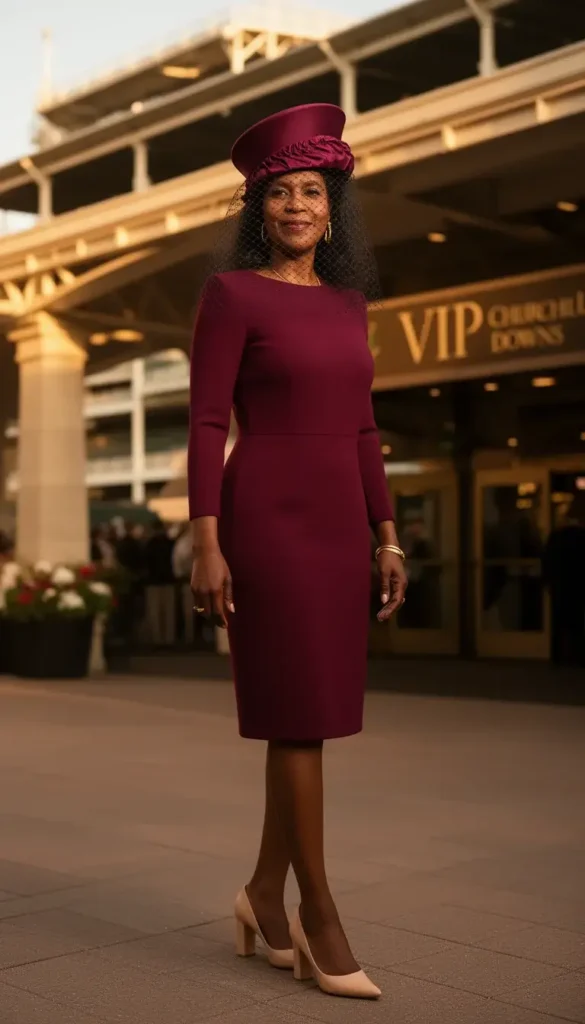
The full-face veil is a power move in Derby hat dressing that belongs firmly in the middle of this spectrum because it requires precision to execute well. Too casual an outfit underneath, and the dramatic veil reads as a costume.
Too formal, and the overall look loses the approachability that makes Derby dressing enjoyable. The cocktail hat with a full birdcage or full-face veil occupies a very specific and intentional fashion register that rewards research and confidence equally.
The veil works best when the hat’s base is structured, and the color is rich and deliberate. Burgundy, deep teal, emerald, or midnight navy all provide the kind of visual authority that supports the commitment of a full veil.
The dress underneath should match the hat closely in tone, creating a cohesive silhouette from which the veil emerges naturally rather than as a separate element.
This is a look that photographs exceptionally well and photographs badly if executed with any ambivalence. Clarity of intention is everything.
11. The Fresh Floral Crown Hat
Churchill Downs is inseparable from flowers.
The roses draping the Derby winner are the event’s most iconic visual, which makes a hat built from fresh florals the most direct possible engagement with that symbolism.
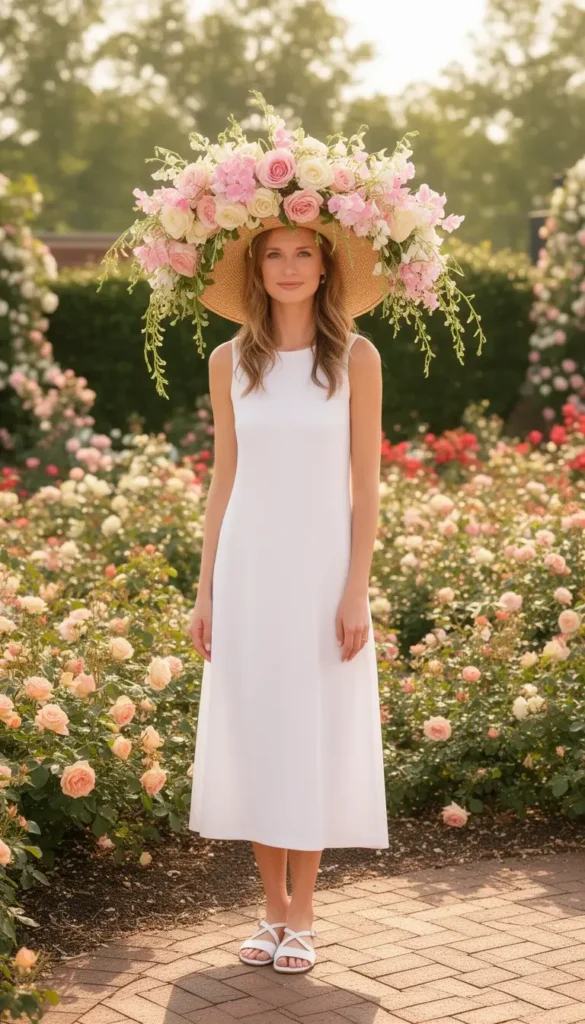
A straw wide-brim base with its crown wrapped entirely in fresh garden roses, sweet peas, ranunculus, or trailing greenery creates something that is simultaneously wearable and genuinely beautiful in ways that artificial florals rarely achieve.
The limitation is practical. Fresh flowers require coordination with the hat the morning of the event and will last approximately five to seven hours under outdoor sun before beginning to wilt.
This makes them ideal for morning arrivals and grandstand viewing but less suitable for long events extending into the evening.
Water tubes hidden within the arrangement extend freshness, and a light mist of water before heading out helps considerably.
The outfit underneath should be as simple as possible, since the hat is carrying the entire visual ambition of the look and needs no competition from below the neck.
12. The Feather Spray Hat
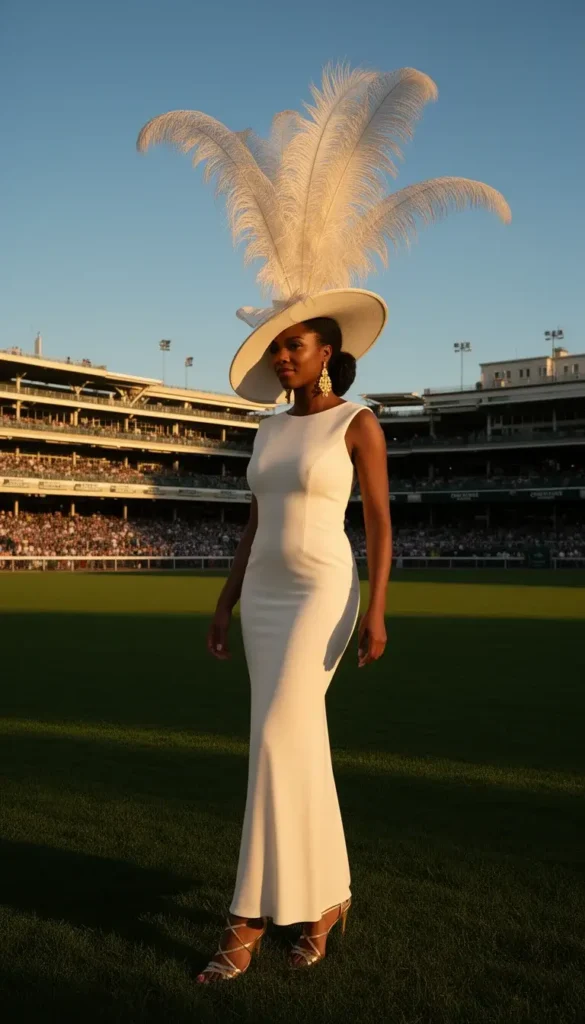
Feathers at the Derby carry their own history, moving through every decade of the event’s fashion coverage as a recurring statement of theatrical ambition.
The upward spray of ostrich or coque feathers curving away from one side of a structured hat brim is a silhouette so visually strong that it reads clearly from across a stadium and photographs dramatically at every distance.
The key to feather spray hats working rather than simply being large is the quality of the feathers themselves.
Synthetic or low-grade feathers look flat and dull in direct sunlight, while genuine ostrich or pheasant feathers carry a luminosity and movement that photographs entirely differently.
When a feather spray catches a slight breeze, and the individual plumes separate and shift independently, the effect is something no artificial material can replicate.
Height control matters here. A feather spray that extends more than twelve inches above the hat brim will interfere with the sightlines of people seated behind you, which is worth considering before selecting this style for grandstand seating.
13. The Tulle Halo Brim Hat
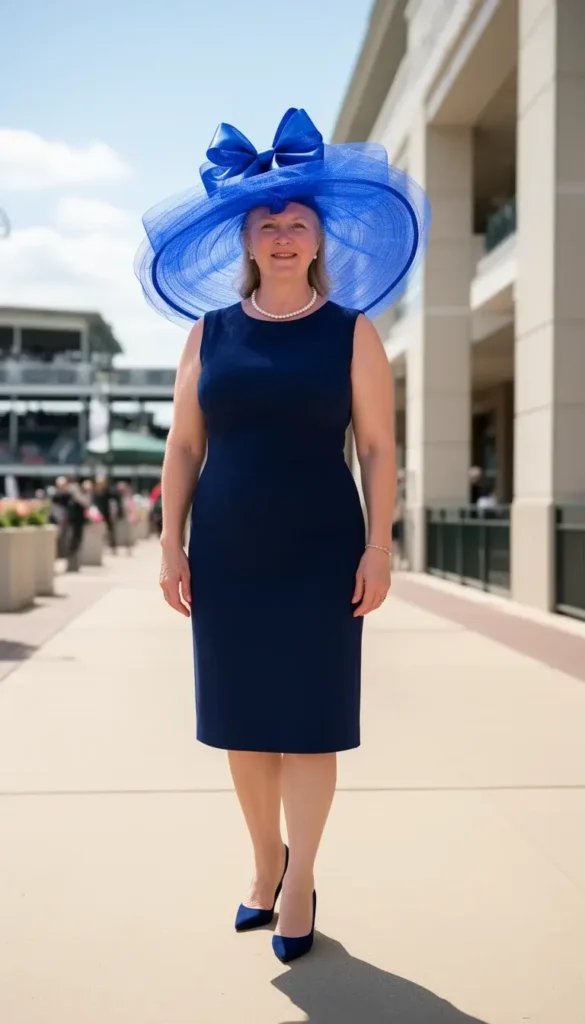
The halo brim hat introduces a dimension of theatrical presence that the standard wide-brim never quite reaches.
Rather than a solid brim extending outward from the crown, the halo brim is constructed from layered or gathered fabric, usually tulle or stiff organza, that creates a floating circle effect around the head.
The visual result is something between a hat and a frame for the face, which photographs with a dramatic quality that even larger, solid-brim hats don’t always achieve.
The structural engineering required to hold a halo brim flat and level is significant, which is why this style tends to come from dedicated milliners rather than mass-market hat producers.
The investment in a properly constructed halo brim shows immediately in how it sits and photographs compared to cheaper versions that droop or tilt under their own weight.
Vibrant, saturated colors work particularly well in this format. Cobalt, vivid coral, deep violet, and rich emerald all carry the scale of the halo brim’s statement without getting lost in it.
14. The Oversized Sun Hat With a Statement Ribbon
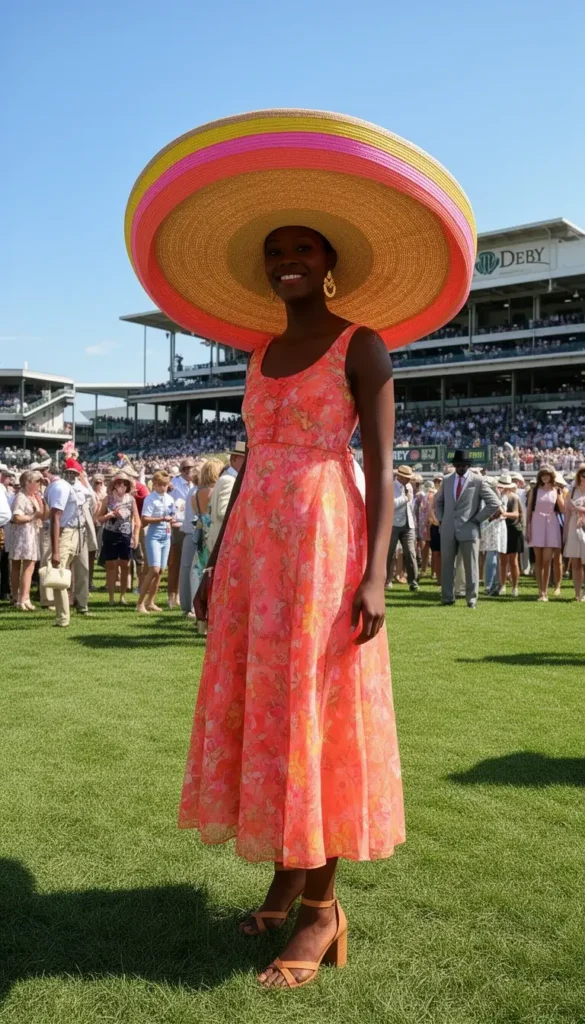
The oversized sun hat, when treated as a genuine fashion choice rather than pure sun protection, crosses into statement hat territory through sheer scale and deliberate accessorizing.
A brim that extends fourteen inches or more from the crown creates its own weather system, which is practically useful in Kentucky’s May heat and visually striking in every photograph taken within a fifty-foot radius.
The ribbon is what makes this fashion rather than beach.
A wide grosgrain or satin ribbon in a bold or contrasting color tied around the crown with long trailing ends adds movement, color, and intention to what would otherwise simply be a very large straw hat.
The ribbon’s color should be picked directly from the dress, creating a clear visual dialogue between hat and outfit.
This style suits the Derby lawn and outdoor viewing areas more naturally than the formal grandstand, where brim scale has more spatial consequence. In open outdoor settings, the hat’s generosity reads as southern ease rather than overreach.
15. The Hat Covered Entirely in Silk Flowers
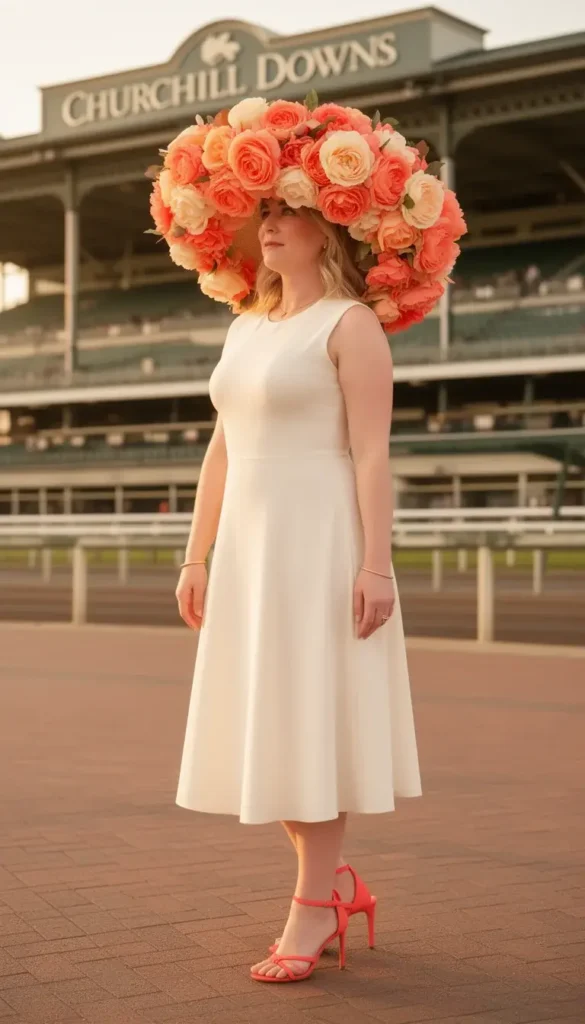
A hat so thoroughly covered in florals that no base material is visible is making a very specific kind of statement.
It’s saying that the flowers are the architecture, that abundance is the aesthetic, and that the Derby is the exact right occasion for this level of commitment.
And it is. The entirely floral hat is one of the most purely occasion-specific pieces in all of accessories dressing, belonging at Churchill Downs in a way it simply doesn’t belong anywhere else.
Silk flowers are preferable to fabric flowers at this scale because they catch light with more realism and vary in petal shape in ways that make the overall arrangement look deliberately composed rather than mass-produced.
The palette of the floral arrangement should reference the dress’s colors rather than match them exactly, creating harmony rather than redundancy.
The outfit underneath should contribute nothing to the visual conversation. A simple, well-fitted dress in a neutral or single color that picks up one tone from the hat arrangement is all this look requires from the shoulders down.
16. The Upturned Brim Hat With an Oversized Satin Bow
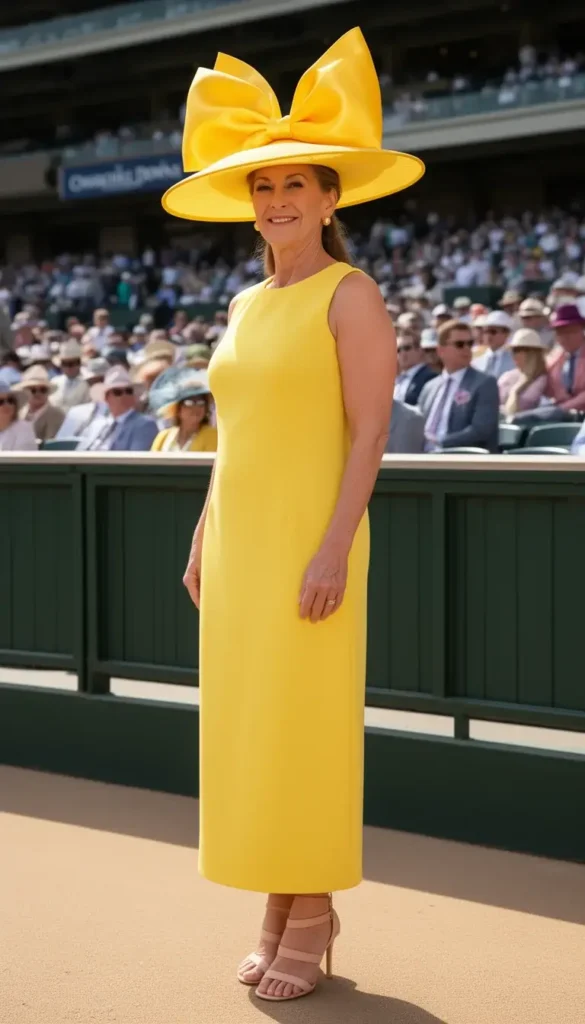
The upturned brim combined with an oversized bow occupies a distinct place in Derby hat history.
It’s the silhouette that appears most consistently in archival coverage of Churchill Downs fashion, the hat that looks like it was designed specifically for this event and no other.
When executed in a saturated solid color, it reads as both historically rooted and completely current.
The upturn changes the hat’s entire visual character. Where a flat brim creates a parasol effect, an upturned brim opens the face to view and directs the observer’s eye toward the bow and the hat’s architecture rather than its shadow.
Photographs taken head-on capture the bow’s full dimension. Photographs taken from the side reveal the brim’s dramatic curve. Either angle is a strong composition.
This hat style rewards monochromatic dressing more than almost any other format because the outfit’s job is simply to extend the color story that the hat began.
17. The Sculptural Architectural Fascinator
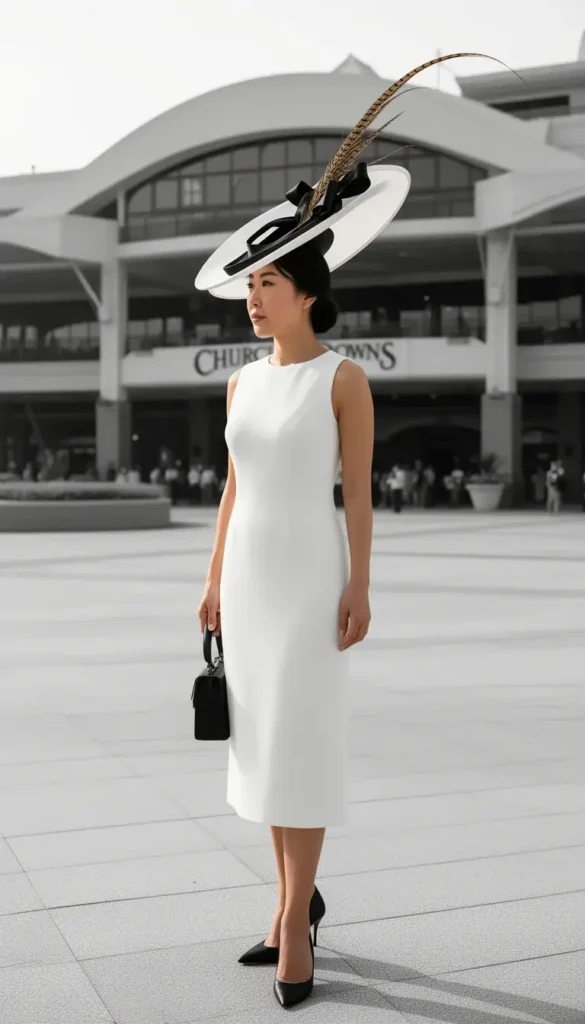
This is the point on the spectrum where the hat becomes an object.
The sculptural architectural fascinator, made by a milliner working with rigid buckram, felt, or thermoplastic materials shaped into abstract or geometric forms, reads as wearable art rather than conventional headwear.
The shapes that fall into this category include sweeping arcs, abstract ribbons of material, geometric planes, and curved forms that reference natural shapes in highly stylized ways.
The distinction between this and a standard fascinator is entirely one of craft intention. A standard fascinator places decoration on a base. An architectural fascinator uses the base itself as the decoration.
Every surface, angle, and edge is considered a design decision rather than a structure to which trim has been applied.
These pieces require a milliner, not a hat retailer. The names worth researching within this aesthetic in contemporary American millinery include Philip Treacy-adjacent working styles and newer American milliners who produce work specifically for the Derby market each spring.
18. The Wide-Brim With Full Feather Trim Circumference
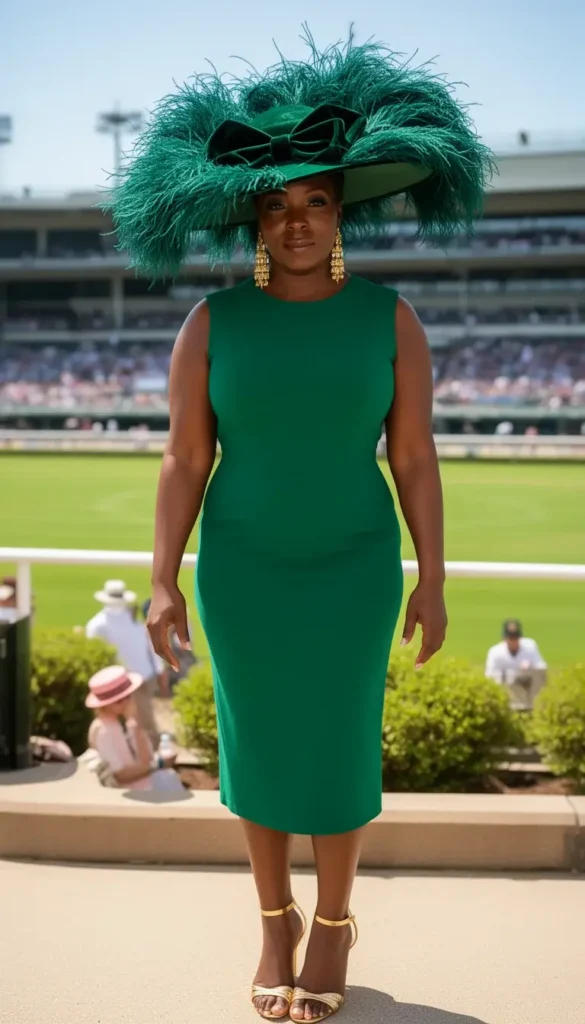
Feathers placed around the entire circumference of a wide brim rather than in a single upward spray create a completely different visual effect.
Where the spray is directional and theatrical, the full circumference trim is abundant and enveloping, creating a frame around the face that reads as both dramatic and organic.
The hat looks as though it grew this way rather than having been assembled, which is the particular achievement of good millinery trim work.
This is a genuinely large hat in terms of spatial claim. The feather trim adds two to four inches of soft volume beyond the structural brim, which means the full width of the hat in motion is considerable.
In the grandstand, the person behind you will spend the afternoon viewing the show through a frame of emerald coque feathers. Lawn seating avoids this problem entirely.
The full-trim hat suits a wearer who understands that this is the most visible item of clothing they own and has composed the rest of the look accordingly.
19. The Full Picture Hat With a Fantasy Crown
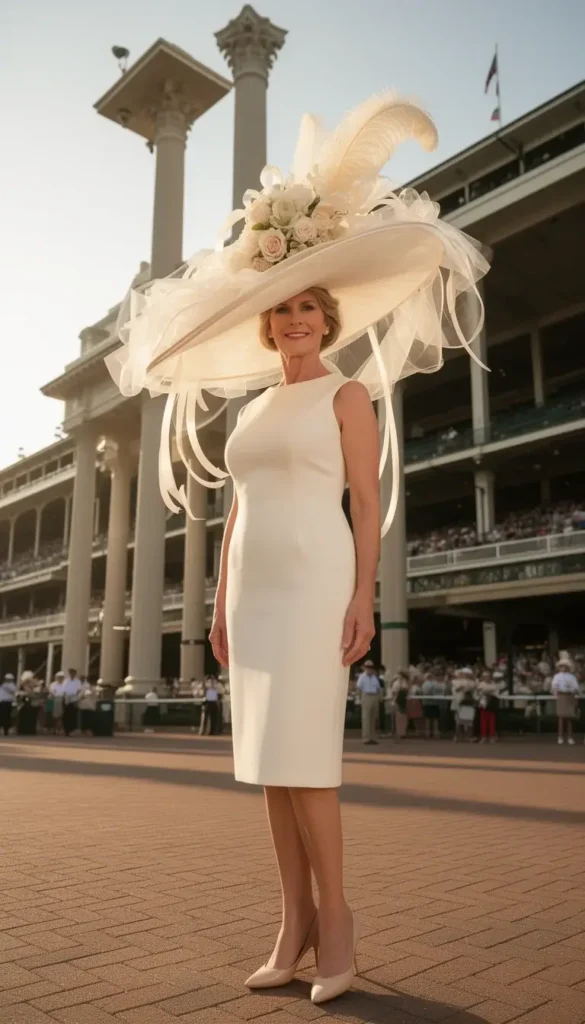
The picture hat is the Derby’s most historically rooted hat silhouette, named for the portraits of aristocratic women in wide-brimmed confections that defined formal dressing for centuries before it arrived at Churchill Downs.
At eighteen inches or more of brim width, the picture hat requires its wearer to move differently through space, to angle through doorways, to turn the head more deliberately, to occupy space with the kind of physical awareness the hat demands.
The fantasy crown is what separates a very large plain hat from a genuine picture hat moment.
Layered tulle, trailing ribbons, silk flower clusters, and a single substantial feather plume combine to create a crown construction that has height, depth, and genuine visual complexity when viewed from any angle.
Photographs taken from below show the crown’s architecture against the sky. Photographs at eye level reveal the full drama of the brim width extending in every direction.
This hat is not for the undecided. It is for the person who arrived at Churchill Downs to be part of the spectacle, not merely to witness it.
20. The Avant-Garde Sculptural Wide-Brim in a Saturated Color
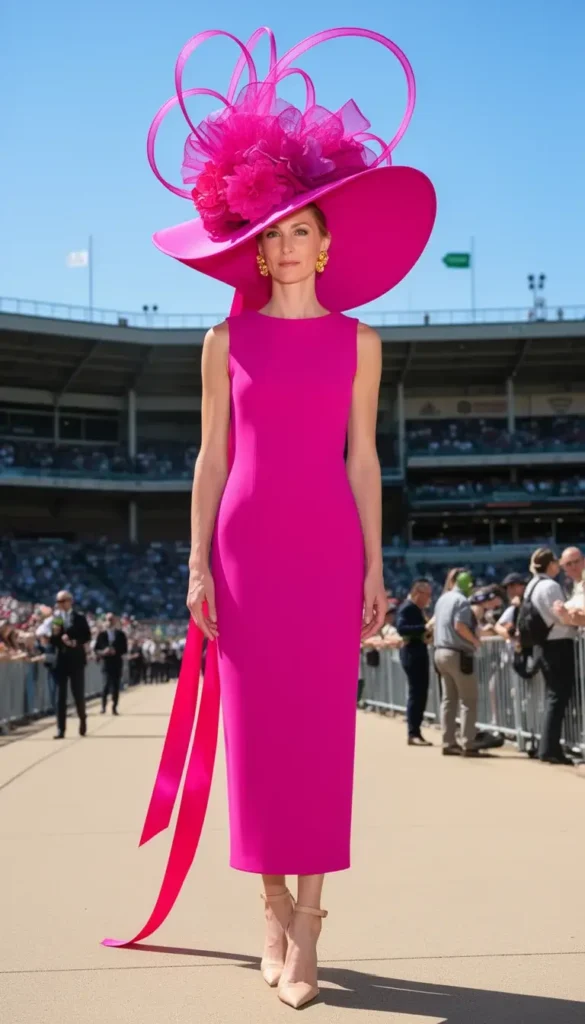
This tier is reserved for hats that exist as genuine artistic statements.
The avant-garde sculptural wide-brim takes every element of the classic Derby hat and amplifies each one past conventional proportion, combining dramatic brim width with abstract crown elements, oversized floral sculpture, and a color so vivid and fully committed that it reads as deliberate aesthetic philosophy rather than accessory selection.
The construction at this level is complex, requiring organza loops that catch and transmit light differently throughout the day, structural armatures that hold abstract forms against wind and movement, and trim work of sufficient quality that every element maintains its intended relationship to every other element across hours of outdoor wear.
Dressing for this hat means removing yourself entirely from the equation.
A sleek column dress in the same saturated color as the hat, minimal shoes, and no jewelry beyond a single subtle piece leaves nothing to distract from the hat’s complete statement.
The person wearing this hat is aware that they will be photographed repeatedly throughout the day. They dressed for it.
21. The Showstopper
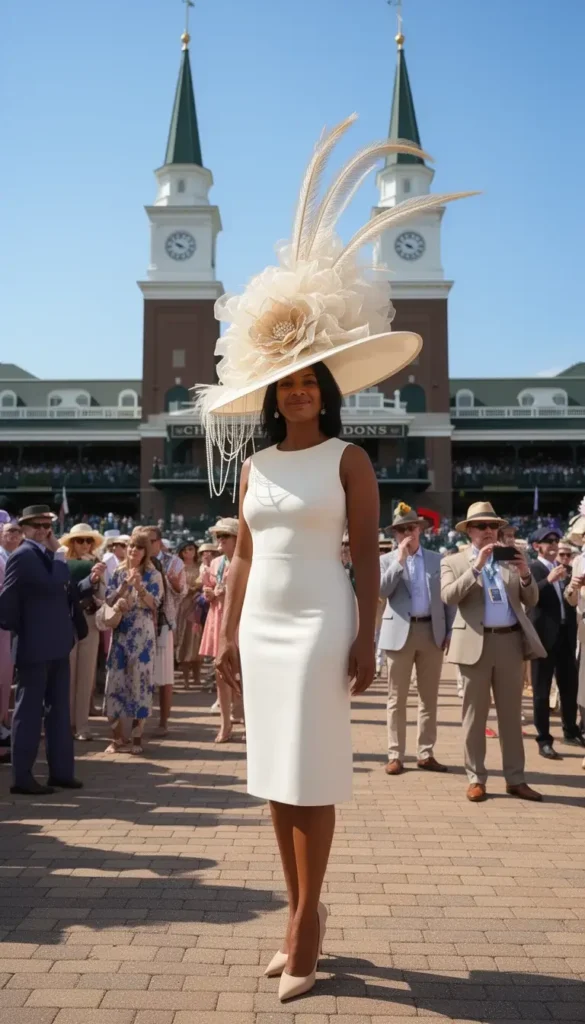
There is one hat at every Kentucky Derby that stops the grandstand. It doesn’t happen because the wearer is loudest or most decorated in a simple quantitative sense.
It happens because every element of the hat is working together at the highest possible level of craft and intention, creating a piece so fully realized that it transcends accessory and becomes the entire reason someone is remembering the day.
The showstopper hat is always architectural at its core. The brim is genuinely wide. The crown has genuine height. The materials are genuinely quality.
And the overall construction presents a clear and singular point of view, not multiple competing ideas assembled in hopes that one of them lands.
At Churchill Downs, the showstopper also requires the correct backdrop.
The twin spires are the most photographed architectural element in American horse racing, and a hat with the scale and presence to hold its own against them in a frame creates images that transcend social media and become genuine Derby fashion records.
That is the hat at the top of this list. It is not the biggest hat. It is the most completely right hat, worn by the person who understood, from the moment they chose it, exactly what the day was for.
The full range from hairpin to showstopper all belongs at the Derby.
What this ranking is really measuring is not quality or correctness but commitment, the commitment to a specific level of statement that matches how you want to experience the day.
Every hat here is the right hat for someone. The wrong hat is the one worn without conviction.