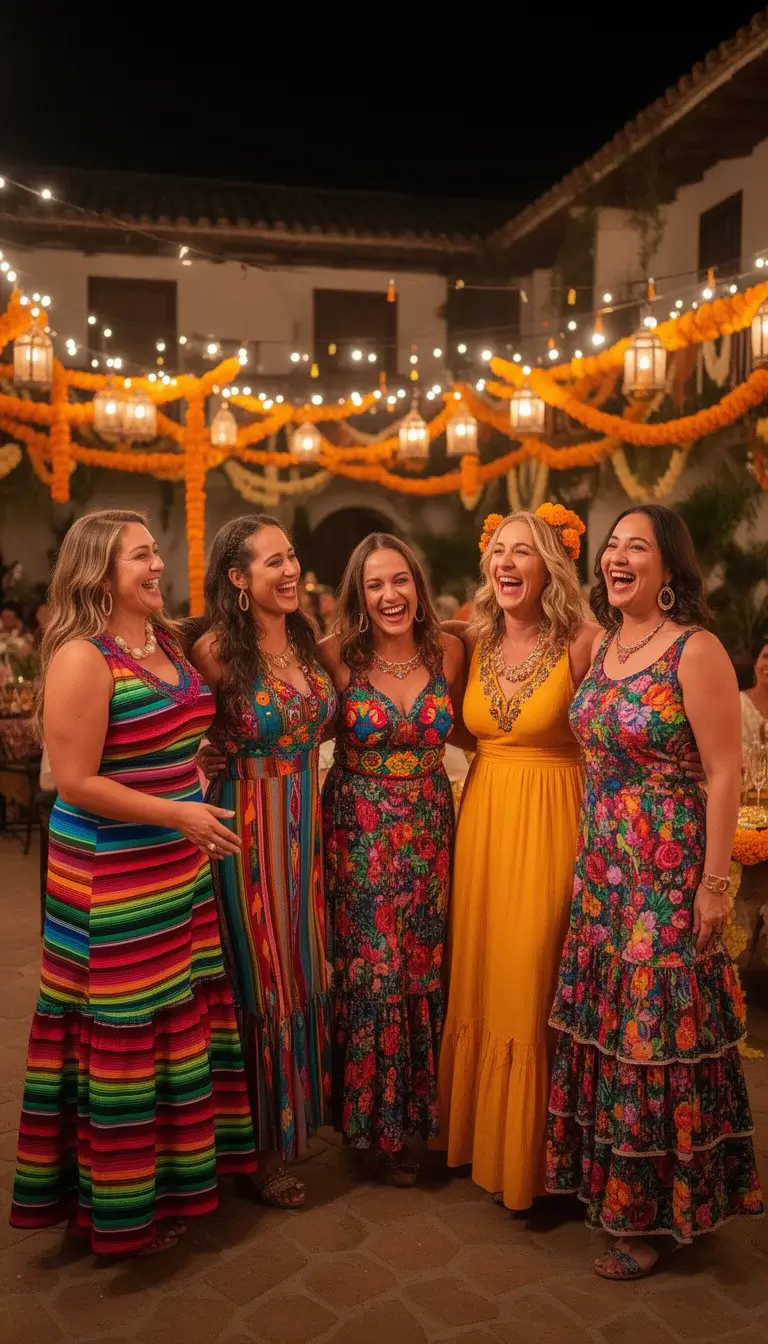
Mexican textile traditions are among the most visually rich on earth.
Otomi embroidery, Zapotec weaves, Talavera tile motifs, and serape stripes each carry centuries of meaning, and that’s exactly what makes them so compelling to wear thoughtfully.
This isn’t a post about costume dressing. It’s about understanding the difference between appreciation and appropriation, then building outfits that honor the craft behind the print.
Why Cultural Context Changes Everything About Print Dressing
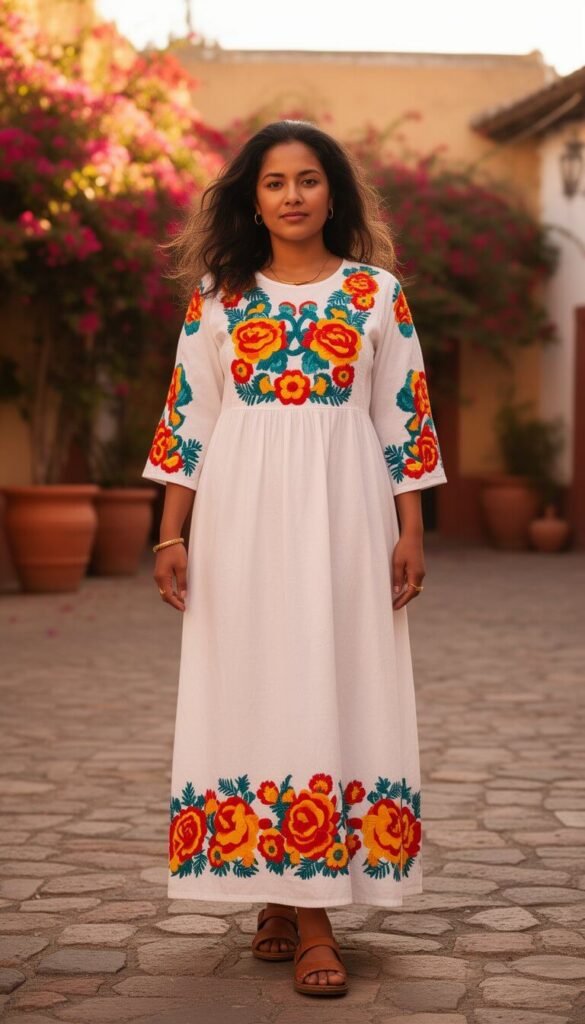
Before the outfits, a brief but necessary note. Mexican prints aren’t a single aesthetic category; they are dozens of distinct regional traditions, each tied to specific communities, often to specific families.
Otomi work comes from the Hidalgo region. Zapotec weaving is rooted in Oaxaca’s valleys. Tehuana embroidery belongs to the women of the Isthmus of Tehuantepec.
Wearing these prints respectfully starts with knowing what you’re wearing and why it matters.
Supporting artisan-made pieces, buying from Mexican designers and cooperatives, and avoiding mass-produced approximations are all concrete ways to translate appreciation into action.
1. The Otomi Embroidery Midi Dress
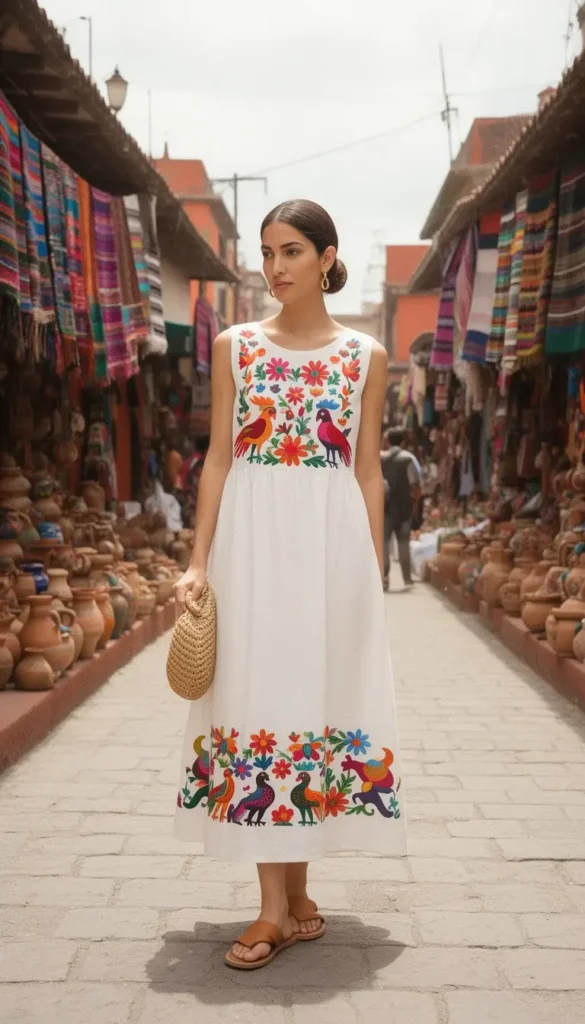
Otomi embroidery is one of the most recognizable Mexican textile traditions, characterized by its whimsical animal and floral motifs stitched in bright thread on natural-fiber cloth.
Originating from Tenango de Doria in Hidalgo, each design historically carried symbolic meaning tied to local flora, fauna, and cosmological belief.
Today it’s been widely printed onto fabric rather than hand-stitched, so when shopping, the choice between the two matters. A hand-embroidered piece supports the artisans directly; a printed version can still be beautiful, but knowing the difference is part of wearing it well.
For the dress itself, let the embroidery speak. Pair a white or natural-ground Otomi midi with flat leather sandals, keep accessories architectural and minimal, and avoid layering competing prints. This print is visual poetry on its own.
2. The Serape Stripe Co-Ord Set
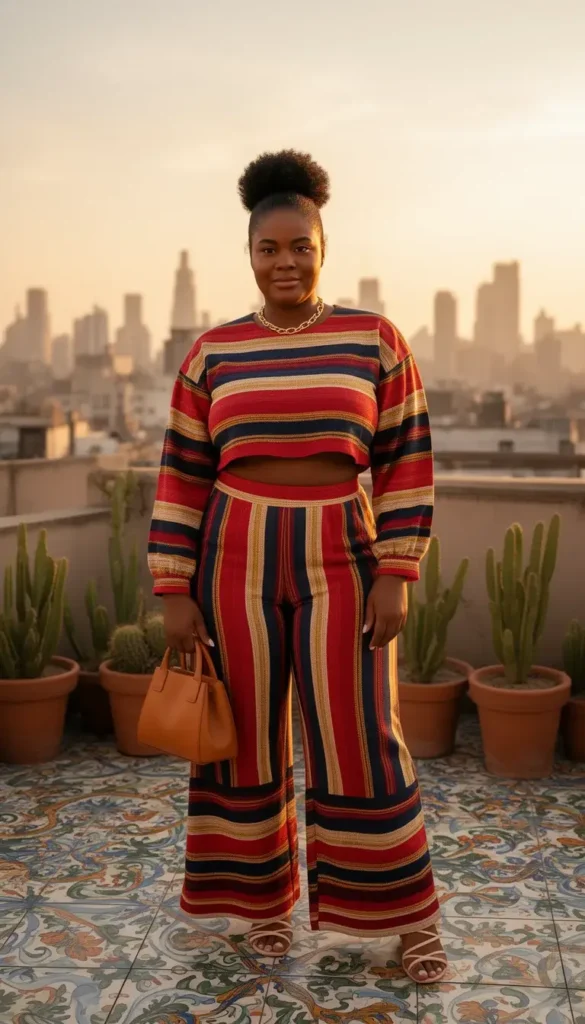
The serape is a long woven blanket-shawl that has been produced across Mexico for generations, with some of the most celebrated versions coming from the town of Saltillo.
Its bold horizontal stripes in saturated colors, often radiating outward from a central diamond motif, have made it one of the most globally recognized Mexican textiles.
When the serape print is translated into a co-ord, the key is proportion and restraint. A cropped blouse and wide-leg trouser in matching serape stripe creates the right balance of intention without tipping into costume territory.
Keep footwear simple, perhaps a nude mule or a clean white sneaker, and ground the look with a solid-colored bag in one of the palette’s anchor tones. The geometry of the stripe does all the work; your job is to stay out of its way.
3. A Huipil-Inspired Shift in Vivid Color

The huipil is one of the oldest garments in Mesoamerican dress, a rectangular tunic worn by Indigenous women across Mexico and Central America. Its construction is intentionally simple, but the embroidery and weaving that decorates it can be extraordinarily complex.
Contemporary designers, particularly Mexican women-owned brands, have created huipil-inspired silhouettes that capture the spirit of the shape without directly copying ceremonial garments.
These make excellent choices for summer events, casual garden parties, or tropical destination occasions. Look for versions that credit their inspiration explicitly and are made in Mexico, then style accordingly.
A vivid shift in jade or magenta, worn with simple leather sandals and a single meaningful accessory, carries tremendous presence. Nothing else is needed.
4. Talavera Tile Print on a Wrap Dress
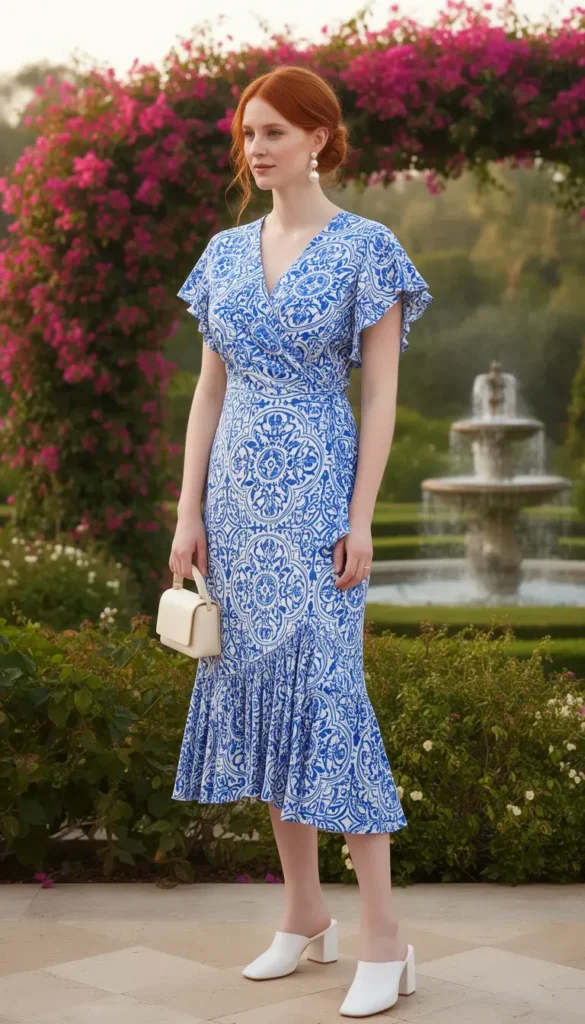
Talavera pottery is a tradition rooted in Puebla, where blue-and-white (and sometimes polychrome) painted ceramics have been produced since the 16th century, blending Spanish, Moorish, and Indigenous design influences.
When Talavera’s characteristic patterns, large floral medallions, intricate lattice borders, and delicate linework, are printed onto fabric, they translate into one of the most elegant Mexican-inspired prints you can wear. A wrap dress is the ideal silhouette because the diagonal drape echoes the flowing character of the Talavera motif.
Stick to the traditional blue-and-white colorway for a look that reads as refined rather than casual, and let the print carry the formality.
This works beautifully for a garden party, a bridal shower, or a summer lunch that calls for something with just enough polish.
5. The Frida Floral Blouse and Wide-Leg Pant
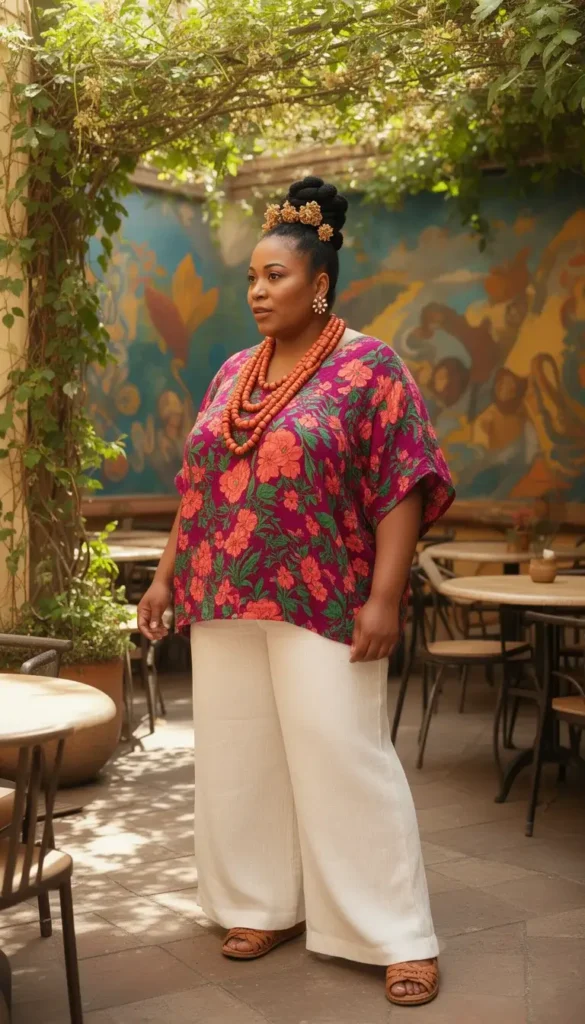
Frida Kahlo’s personal style, layered Tehuana florals, bold jewelry, and unapologetically expressive color, has become one of the most iconic visual languages in fashion history.
Drawing from Frida’s aesthetic is a slightly different conversation than wearing regional print directly, since her look has been so thoroughly documented, analyzed, and celebrated that it exists as its own aesthetic chapter. That said, engaging with it thoughtfully still matters.
Seek out blouses with large, loosely painted botanical motifs in warm magenta, coral, and leaf green, and pair them with structured wide-leg trousers in solid black or cream.
Add a single layered necklace, a pair of simple huaraches, and wear your hair up if the occasion calls for it. This combination reads as fashion-literate and visually deliberate in all the right ways.
6. Amate Bark Art Print Blouse
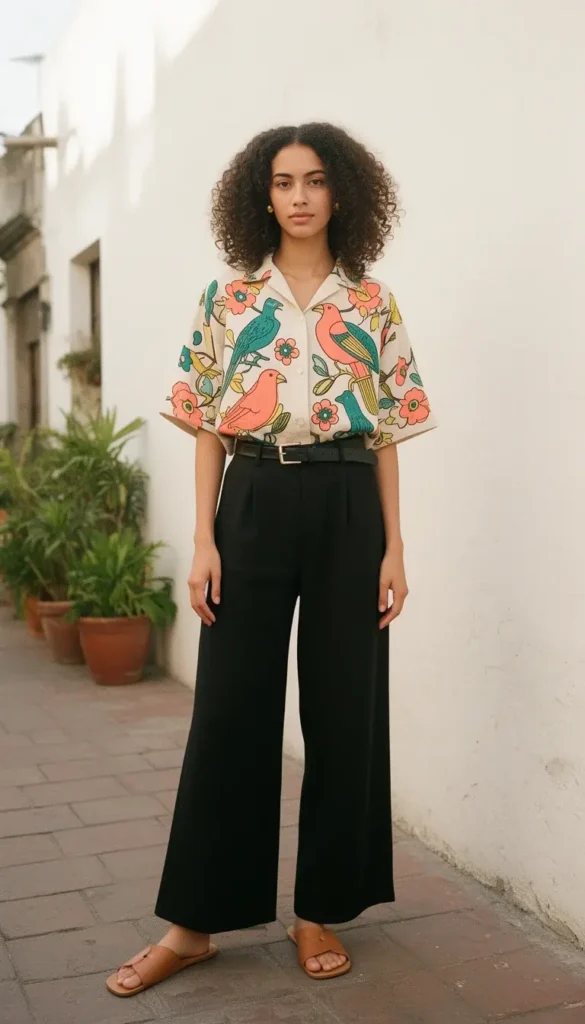
Amate is a form of paper made from the bark of wild fig trees, used by pre-Hispanic cultures for manuscripts and ritual objects, and still produced today in the village of San Pablito in Puebla.
Nahua artisans in the Guerrero region paint amate paper with vivid, flat-style depictions of animals, flowers, and daily life, a tradition that continues as a living art form rather than a museum relic.
When this distinctive style, bright solid shapes outlined in black on a contrasting ground, is printed onto a blouse or tunic, it creates a wearable piece of art that’s both striking and genuinely meaningful.
Pair an amate print blouse with wide-leg black trousers or dark denim to let the graphic quality breathe, and keep the rest of the look spare. The print commands attention without needing any help.
7. A Cempasúchil Marigold Print Maxi
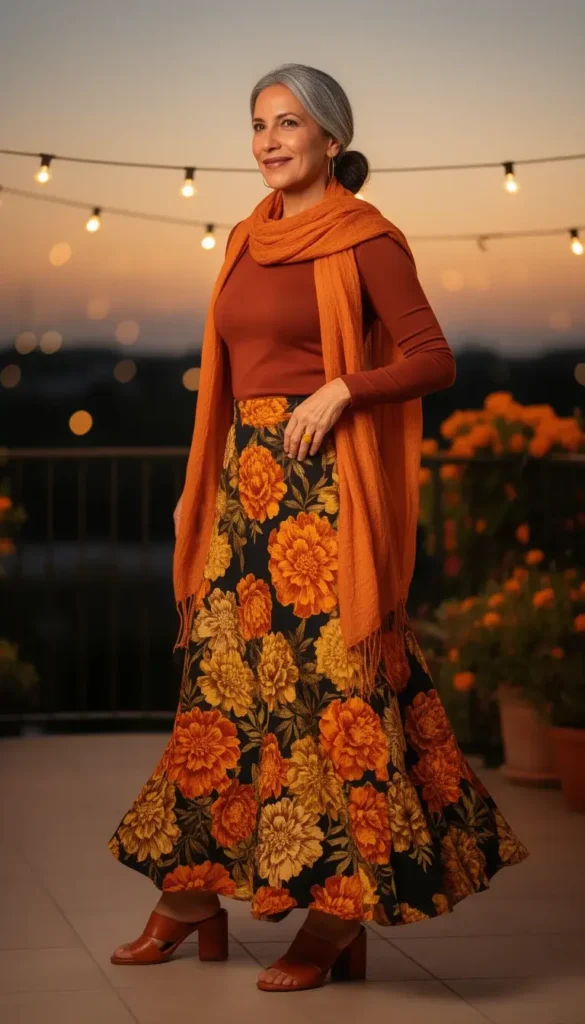
Cempasúchil, the marigold, is sacred in Mexican culture. It’s the flower of the dead, used to guide spirits home during Día de los Muertos, and its vivid orange and gold has a visual weight that feels both ancient and alive.
As a print motif, it’s been embraced by Mexican designers who use it to celebrate rather than commodify the tradition, and that distinction matters when you shop.
Worn outside of Halloween proximity, a cempasúchil print maxi skirt or dress is a genuinely beautiful wardrobe choice, rich in color and layered with meaning for those who know it.
Style it warmly: a deep rust fitted top, cognac leather sandals, and a rebozo scarf in tonal orange draped loosely over the shoulders. This isn’t a costume, and styled with that awareness, it never reads like one.
8. Zapotec Diamond Weave Skirt and Simple Blouse
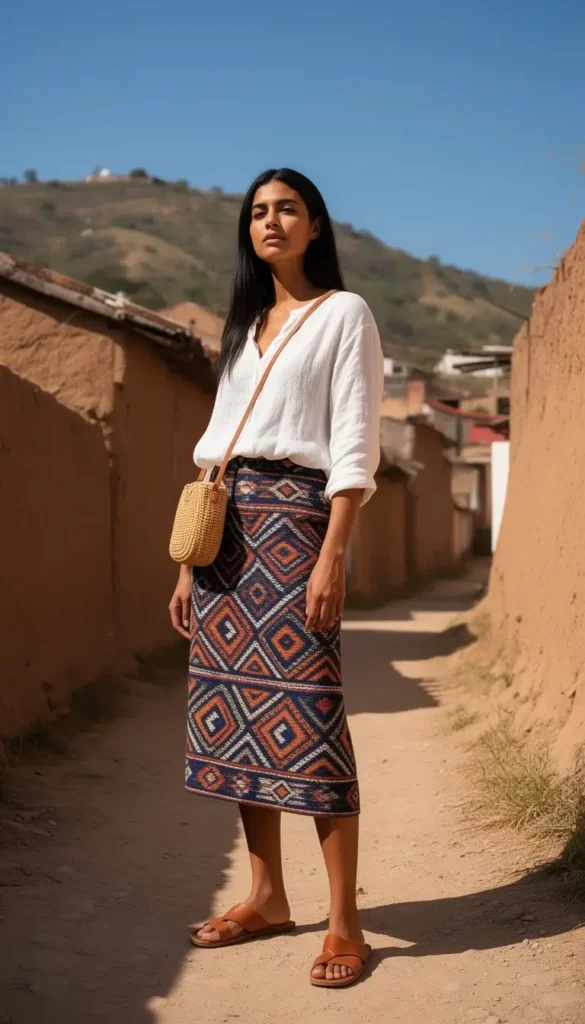
Zapotec weaving is one of Mexico’s most enduring textile arts, produced on traditional backstrap and floor looms in the villages of Teotitlán del Valle and surrounding communities in Oaxaca.
The geometric diamond and stepped-fret patterns are not decorative choices; they are codified design languages passed between generations.
Purchasing a Zapotec-woven piece from a Oaxacan artisan cooperative or certified market vendor directly supports the communities keeping the tradition alive.
For wearing, the inherent structure of the weave does the styling work. A Zapotec-patterned midi skirt in indigo and cream looks extraordinary paired with a simple white blouse, tucked loosely, and finished with flat sandals and nothing else.
The sophistication of the weave makes understatement the only sensible choice.
9. The Embroidered Denim Jacket
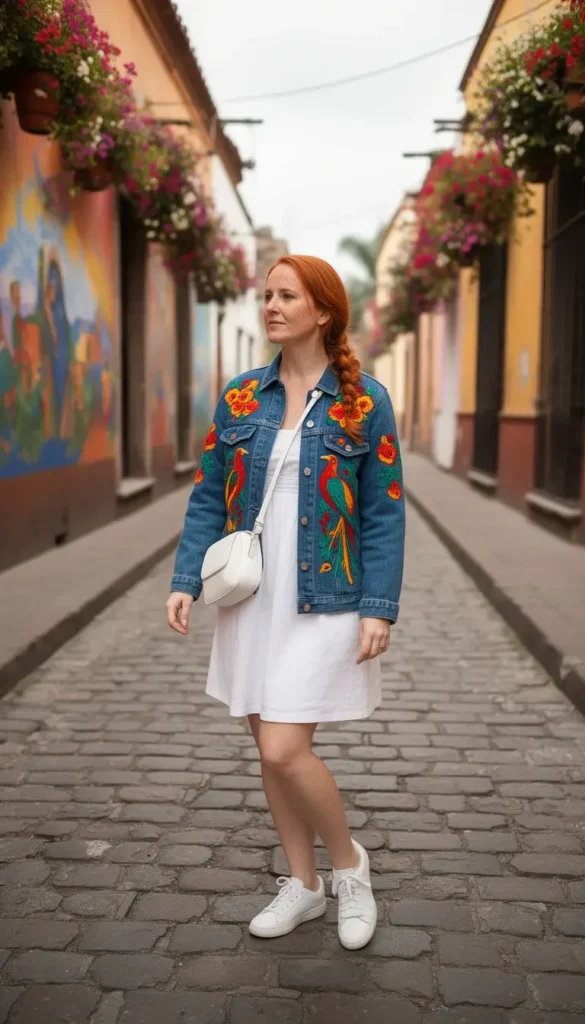
Mexican embroidery on denim is one of the most accessible entry points into print dressing rooted in this tradition.
The reason is layering: a jacket is worn over another outfit, which naturally frames the embroidery as an accent rather than the entire look.
Artisan workshops and cooperatives across Oaxaca and Chiapas produce embroidered denim pieces, often featuring birds, botanical motifs, and geometric border work, and these are the pieces worth seeking out.
Wear yours over a simple white sundress for a summer event, or layer it over a slip dress for an evening with color.
The embroidery provides all the print energy the look needs, so the rest can breathe.
This is also one of the easiest styles to bring into a wardrobe that doesn’t otherwise lean heavily into print dressing.
10. Papel Picado Print Shirt Dress
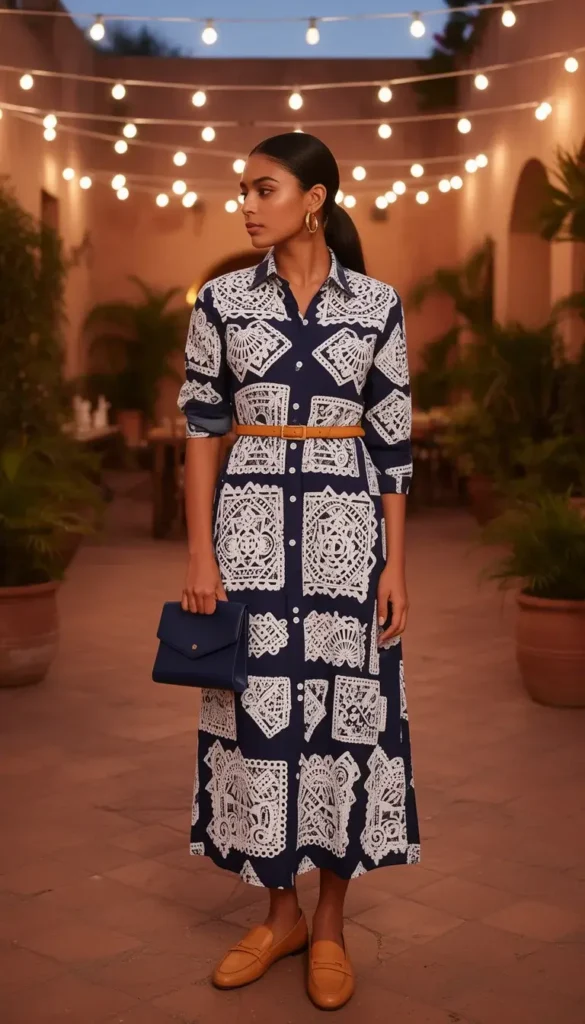
Papel picado, the intricately cut decorative paper banners strung across festivals and celebrations throughout Mexico, has a distinctive visual structure: negative space, lace-like symmetry, and geometric repetition.
When interpreted as a fabric print, it becomes something unexpectedly elegant.
A shirt dress in papel picado-inspired print, particularly in monochrome navy or deep plum with white cut-work-style motifs, sits in that interesting space between casual and occasion.
It’s graphic without being loud. Button down the shirt-dress front and belt it loosely at the waist for daywear, or leave it unbuttoned over a slip for an evening reading that’s more layered and relaxed.
This print has an architectural quality that rewards simple styling and confident wear.
11. Monarch Butterfly Print Sundress
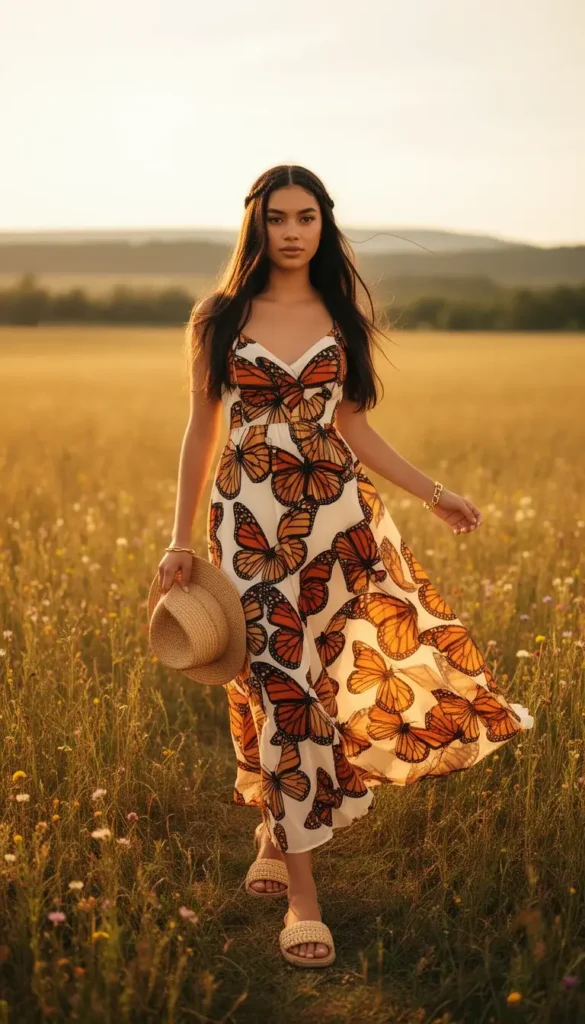
The monarch butterfly holds deep cultural resonance in Mexico, with millions arriving in Michoacán each November, a timing that aligns with Día de los Muertos and has long been understood as the return of ancestral spirits.
As a motif, the monarch appears across folk art, mural painting, and textile traditions. A monarch print sundress in warm amber, burnt orange, and black is one of the more wearable iterations of this symbol, particularly for warm-weather occasions, weekend travel, or a casual outdoor wedding.
Keep the styling sun-worn and easy: flat woven sandals, a simple straw hat, and a light linen shirt tied at the waist if coverage is needed. This is a print that works best when it looks effortless rather than arranged.
12. Geometric Aztec-Inspired Two-Piece
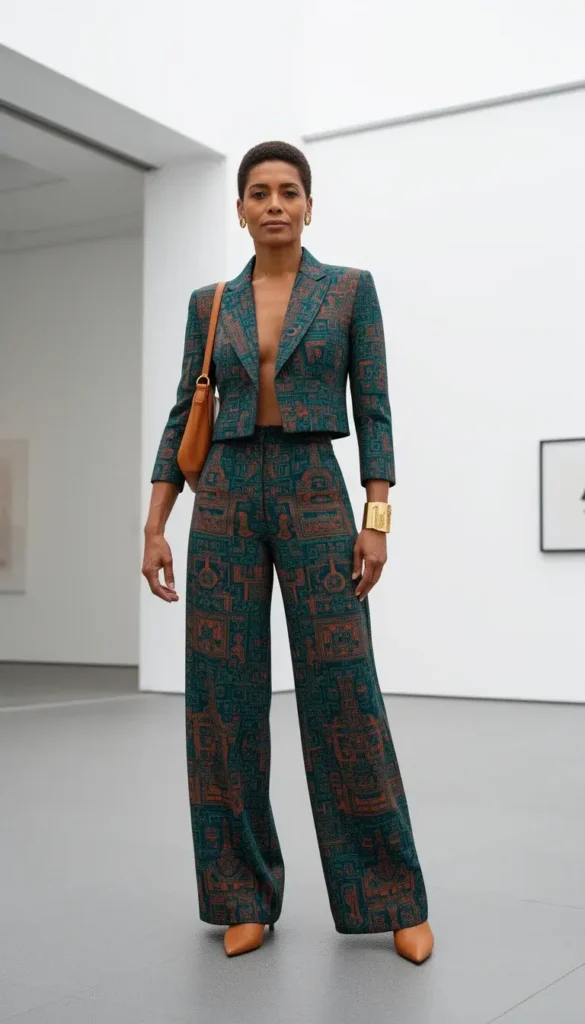
A note worth making here: “Aztec print” is one of the most widely misused terms in fashion retail.
What’s typically sold under that label is often a loose approximation of pan-Mesoamerican geometric patterns, sometimes blending Aztec (Mexica), Maya, and Zapotec visual elements without distinction.
That doesn’t mean geometric prints rooted in these traditions can’t be worn, but approaching them with specificity and choosing pieces from designers who work with named artisan communities adds accountability.
A structured two-piece in deep teal and terracotta geometric weave, whether a skirt-and-blouse set or a cropped jacket with trousers, reads as bold and fashion-forward.
Keep the silhouette sharp and the accessories minimal. The geometry carries the power.
13. The Embroidered Puebla Dress
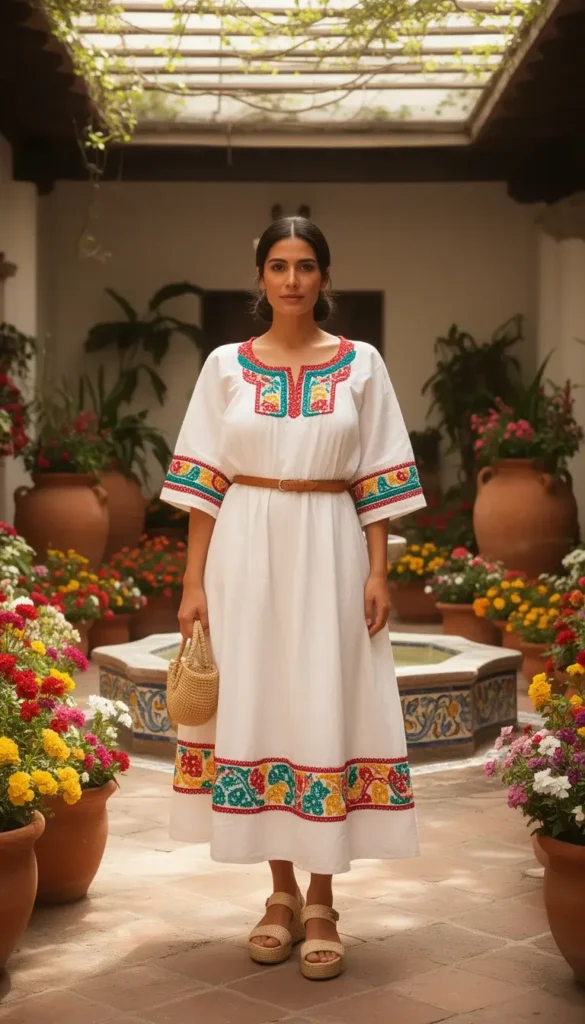
The Puebla dress, or vestido Poblano, is one of the most iconic Mexican folk garments, characterized by its white or cream cotton base and richly colored chain-stitch or satin-stitch embroidery around the neckline, sleeves, and hem.
Chic, widely available, and rooted in a specific regional tradition, it’s also one of the most frequently mass-produced and stripped of context.
When you buy a Puebla dress from an artisan or a brand that sources from Puebla-based workshops, that context returns.
Worn simply, with flat sandals and natural-finish jewelry, the dress needs nothing else.
For occasions where more polish is needed, add a structured tan leather belt at the waist to define the silhouette, and consider espadrille wedges for the height without the formality.
14. A Rebozo-Draped Outfit
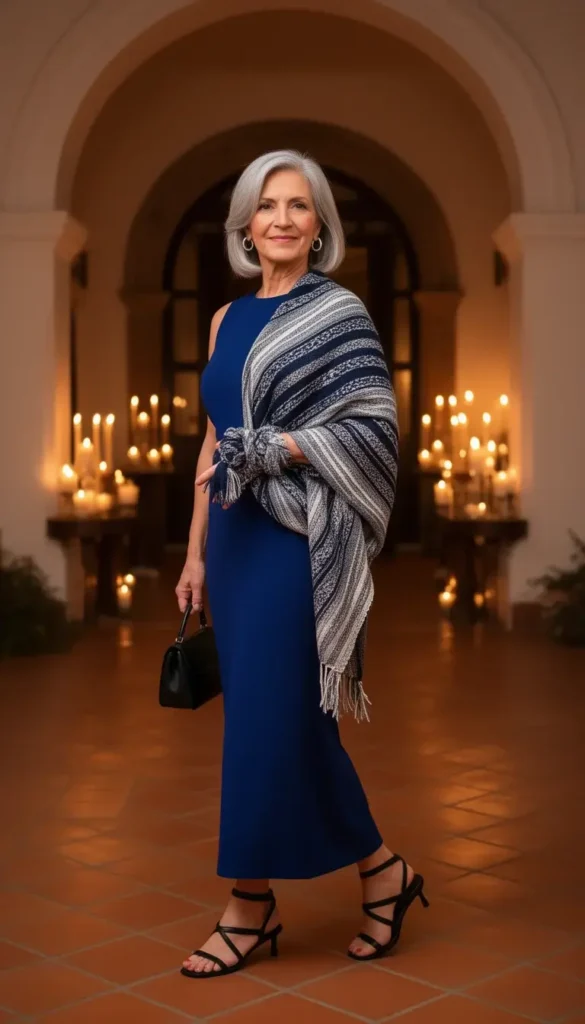
The rebozo is a long, multipurpose cloth woven across Mexico, used to carry babies, shield from sun, accent an outfit, and cover the head for church or ceremony.
Its significance is wide and deep, touching economics, identity, and daily life, which is precisely why wearing a mass-produced imitation misses the point.
An authentic rebozo, or a piece made by a certified cooperative in Tenancingo, Santa María del Río, or Oaxaca, is a textile worth owning as a statement piece and as an act of support.
Draped loosely over a shoulder with a solid-colored midi dress in the rebozo’s accent tone, it elevates any occasion-ready look with genuine cultural texture.
Nothing says “I understand what I’m wearing” more clearly than wearing it correctly.
15. A Mirror Selfie in Mixed Mexican Prints
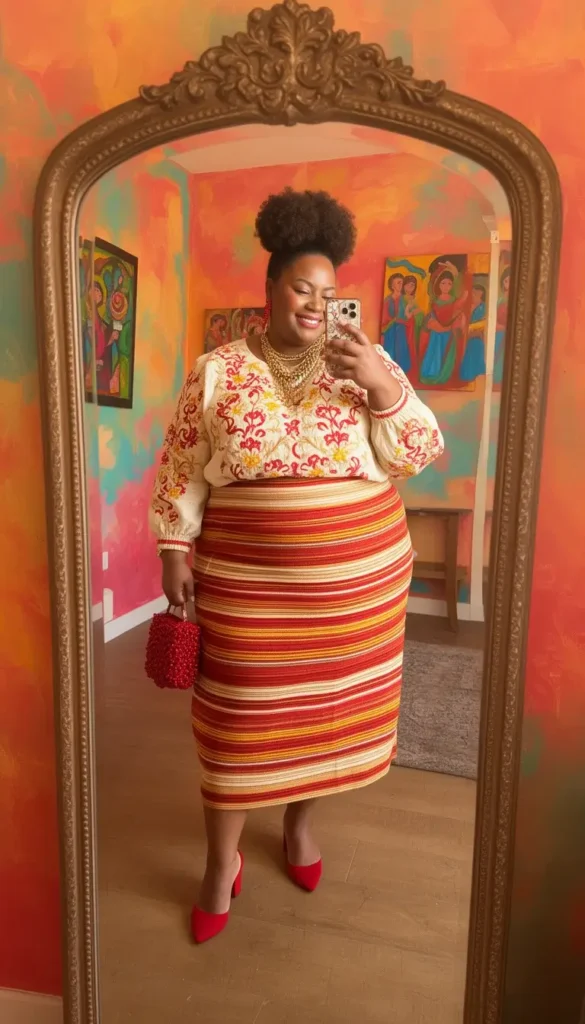
Print mixing done well is confidence dressed as intuition. When you combine two Mexican-inspired prints, the guiding logic is scale and palette.
A large botanical embroidery blouse pairs naturally with a narrow geometric-striped skirt when they share at least two colors from the same warm color family.
This kind of intentional combination is actually closer to how traditional Mexican dress works, layered, vivid, and unafraid of pattern, than the more restrained single-print approach preferred in Western fashion.
A mirror selfie captures this energy particularly well, offering the informality of a real-life wardrobe moment rather than a posed editorial. Wear it to a fiesta, a summer concert, or an outdoor market, and resist the urge to undercut it with too-safe accessories.
16. Sugar Skull Print Maxi Skirt
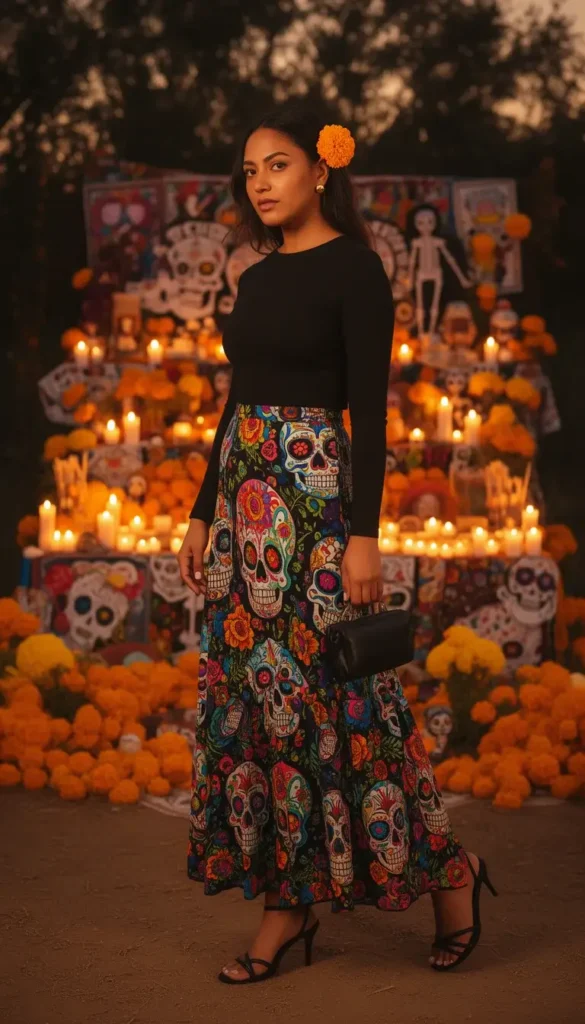
Day of the Dead (Día de los Muertos) is not Halloween. It’s a deeply meaningful celebration of life and death rooted in Indigenous Nahua tradition, observed on November 1st and 2nd with altars, marigolds, and communal remembrance of the deceased.
The sugar skull, or calavera, is its most recognized visual symbol, and wearing it outside of its context or during Halloween requires intentionality.
When styled with care, particularly in the weeks surrounding the actual celebration, a sugar skull print maxi skirt can be worn respectfully if it’s done with understanding and genuine appreciation for the tradition it represents.
Pair it with a simple black fitted top, a single marigold hair accessory, and black strappy sandals. The restraint of the top lets the print carry its full cultural weight.
17. Tropical Mexican Folk Art Print Resort Set
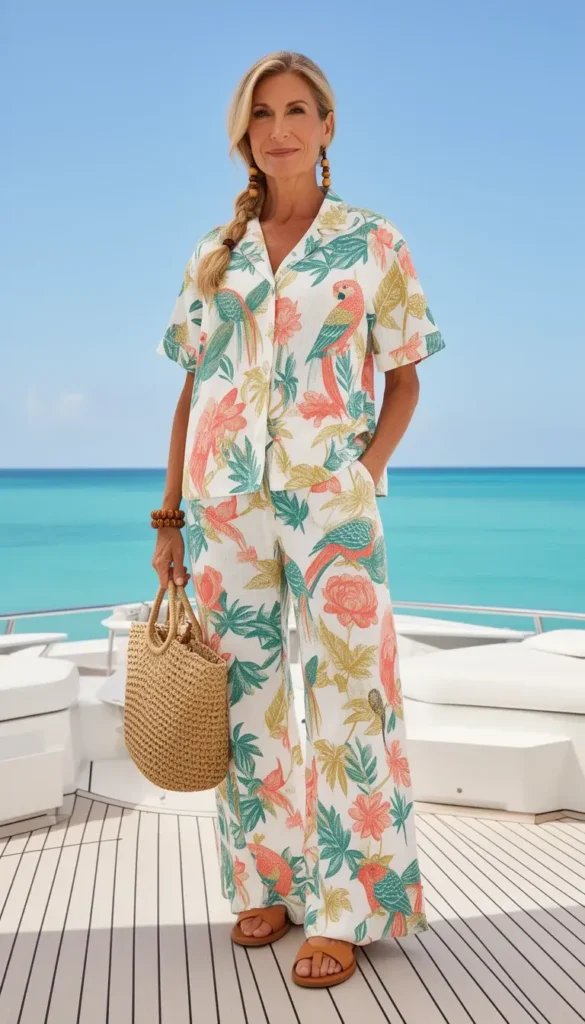
Mexico’s Gulf and Pacific coasts have a visual identity distinct from highland folk art traditions, and the two-piece resort set is where these tropical influences show up most naturally in contemporary fashion.
Think large painted parrots, tropical leaves, and folk art florals in saturated jade, coral, and gold on a loose linen set.
This is vacation dressing that does more than look pretty; it connects to a specific coastal Mexican aesthetic. Wear the set on a terrace, a yacht deck, or a beach wedding where the dress code is festive but informal.
Add wooden jewelry, flat leather sandals, and a woven tote, and you have a look that feels rooted in something real rather than assembled for a resort brochure.
18. The Fiesta Dress in All Its Maximalist Glory
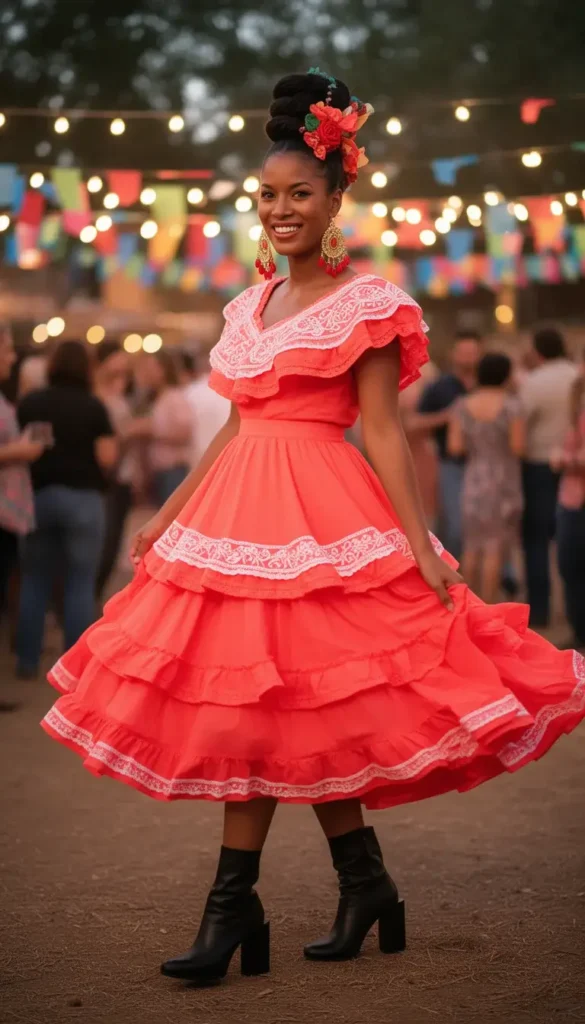
Some occasions ask for more. A quinceañera, a fiesta, a Cinco de Mayo gathering in a context where the culture is yours or you’re a guest invited in, calls for full color and full commitment.
A fiesta dress in deeply saturated tiers of ruffled cotton, traditionally associated with the Adelita figure and revolutionary-era Mexican dress, is exactly the right move when the moment invites it.
Wear the full silhouette, a square or sweetheart neckline, wide ruffled skirt, and bold embroidery or trim, in a palette of deep red, vivid pink, or cobalt.
Braid your hair or wear it in a high chignon, add traditional-style earrings, and let the entire look be exactly what it is: a joyful, fully committed celebration of a tradition that has always been about life in color.
Wearing It Well
The throughline across all 18 looks is the same: intention matters. Mexican textiles aren’t a trend category; they are living artistic traditions produced by specific communities with specific histories.
When you choose a hand-embroidered piece over a fast-fashion approximation, support a Mexican artisan brand, or simply take a moment to understand where a motif comes from, you change the nature of what you’re wearing.
The color stays the same. The beauty stays the same. What shifts is your relationship to it, and that shift is what makes all the difference.